

OGCSA

I recently played an OregonCourse that I have avoided for several years. When I last played it, conditions were awful (although my ball rolled far because the ground was so barren). But this time, the course was in great shape and I had a grand time playing (even though my score wasn’t that great). Every time I passed a greenskeeper or maintenance person I would stop and thank them for doing such great work.

Except for a very small garden, I have never done anything near “greens keeping.” But I can imagine that being successful in operating and maintaining a golf course requires a lot of effort, time, resources, knowledge, and dedication. In other words, a good golf course requires a really good superintendent (who often has a really good team).OGCSA

There is a wide variety of golf course operations in Oregon, from world class operations with multiple courses like Bandon Dunes (shout out to Senior Director of Agronomy Kevin Nice), to small town 9-hole muni courses like Echo Hills (shout out to Randy Speer who did so many things for so many years). Because of the diversity of situations, the role of a golf course superintendent in Oregon can be very different from course to course. Some may only focus on course conditions while others may serve in one or all of the following capacities: superintendent, greenskeeper, equipment manager, general manager, pro, and even course architect. In any event, being a golf course superintendent on any course is not an easy job. But the quality of the course you are playing will depend on the effort, knowledge, and skill of the course superintendent and his/her team.

The Oregon Golf Course Superintendents Association (OGCSA) provides education, a forum for communication, and the enhancement of the image of its members (this is the mission statement of the OGCSA). The organization traces its history back to 1928 when superintendents in Oregon and Washington formed the Oregon-Washington Greenskeepers Association. Oregon split off in the late 1950s to form the OGCSA. The OGCSA is an affiliate of the national Golf Course Superintendents Association of America, which was formed in 1926 and has over 20,000 members worldwide.

OGCSA has over 330 members, who work at almost 60 percent of the golf course facilities in Oregon. Although members are primarily superintendents, members also include greenskeepers, maintenance personnel, equipment managers, and people interested in getting an education in turf management and course operations (like regular golfers). Members also include folks working with turf in non-golf industries, like municipal parks.

OGCSA
Field Day

How does OGCSA help? As its mission states – education and communication. Throughout the year, the OGCSA hosts remote and in-person seminars (including Field Days through Beaver Turf) on all aspects of operating a golf course. OGCSA also provides formal (classroom) and informal (golf tournaments) opportunities for members to meet and share ideas. OGSCA also provides (generally weekly) updates to its members.

To further the education of its existing and potentially new members, OGSCA supports (in time and, through its philanthropic arm, Oregon Turfgrass Foundation, money) Beaver Turf. Beaver Turf is Oregon State University’s nationally renowned turf management program. In addition to doing studies and publishing papers on all aspects of turf management, if an OGCSA member has a turf issue the member can contact Beaver Turf for an answer.

OGSCA also teamed up with its sister organizations in Western Washington and Idaho to publish Environmental Stewardship Guidelines, Best Management Practices for Oregon Golf Courses. This 200-page publication covers all aspects of golf course operations from soil and water management to community outreach. As the title says, there is a ton of ideas in the Guidelines on how to make a course and its operations more environmentally responsible (including sections on conservation, preserving flora and fauna, and carbon sequestration).

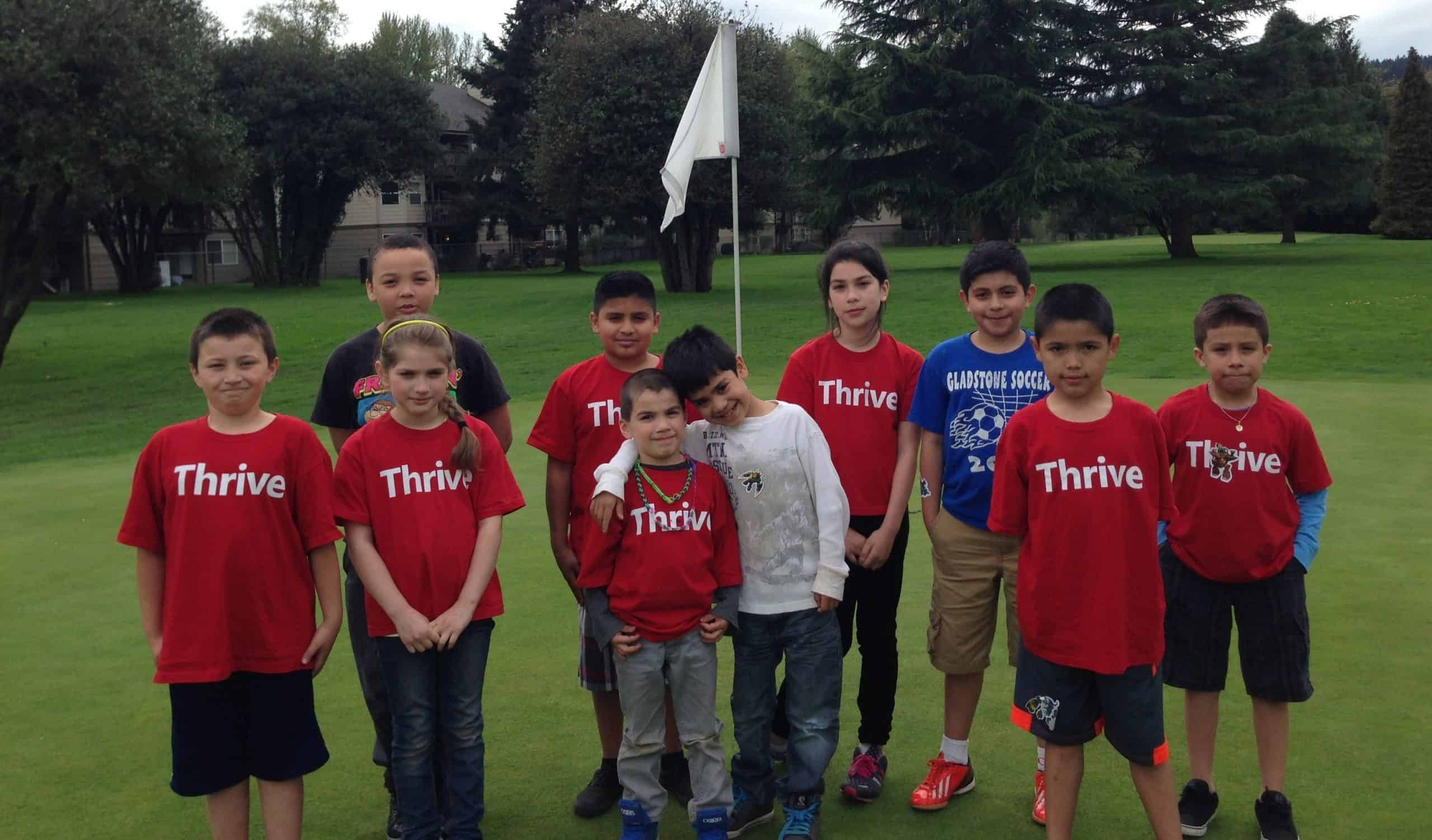
OGSCA also does outreach. It annually holds First Green programs, a science, technology, engineering, math, and environmental outreach program where students in grades K-12 use a golf course as a living laboratory. OGCSA also has a scholarship to support continued education in the turf management field and a scholarship for the children and grandchildren of members.

OGCSA
Field Day

Through the years, Oregon has been lucky to have had some of the best golf course superintendents in the country, many recognized nationally as leaders in environmental stewardship of golf courses. Some of these superintendents include Troy Russell and Ken Nice of Bandon, Ryan Bancroft of Salishan, David Phipps of Stone Creek, Gary Early of Salmon Run, and Chris Robson of Glendoveer. These folks and OGCSA have shown golf courses can serve as good environmental stewards.

Should this matter to the average golfer? Of course. Much like the course I wrote about in the opening of this article, the right supervisor and crew can make a fundamental difference in how a course looks, plays, and contributes (not harm) to the well-being of the players and the local area. If you enjoy golf, if you enjoy a golf course, if you are grateful for the green space that a golf course gives, it’s those folks who make that happen. And OGCSA helps those folks do better.

If you get the chance support OGCSA by becoming a member, donating to the Oregon Turfgrass Foundation, or participating in Rounds for Research (where golfers bid on donated foursomes from private, resort, and public facilities, with proceeds supporting OGSCA; watch for it in April 2027). And if you like the way the course looks and plays (apart from how you are playing), take the time to thank the superintendent and the crew; they work hard to allow you to enjoy the day.

Interview With John Ball, New Director of Golf for the City of Portland

There has been a director or manager of golf operations for the Portland Municipal Golf Courses since Eastmoreland opened its first 9 holes in 1918. Since 1987, there have only been three directors of golf: golf pro and architect John Zoller, golf pro Vincent Johnson, and now John Ball.

John Ball, Portland Golf
John Ball, Director of Golf for the City of Portland

In the landscape of Oregon golf courses, the golf courses owned by the City of Portland (and managed by its Department of Parks & Recreation) are, collectively, pretty important. The courses comprise one of the most varied and acclaimed municipal golf complexes in the country: Eastmoreland (a Chandler Egan design, seventh oldest course in Oregon and two-time host of the USGA Amateur Public Links Championship), Rose City (with a clubhouse on the National Register of Historic Places), Heron Lakes (both Blue and Greenback courses, home of the former NW Open and the 2000 USGA Amateur Public Links Championship), RedTail (a leased property located in within the Beaverton city limits), and Colwood (a golf practice complex that includes a 3-par course). These are all great courses (and Colwood is a great practice facility) that deserve to be played.

The Golf Program Manager, aka the Director of Golf, is responsible for managing the golf program within the City of Portland. This means how the courses and shops run, and how people both inside and outside the City of Portland interface with the courses and clubhouses. Such duties include but are not limited to: ensuring financial stability of the program; managing golf maintenance operations; overseeing the lease agreement with RedTail Golf, LLC (for RedTail), and contract with Kemper Sports Management, LLC (for the other golf facilities); ensuring adherence to the City of Portland’s core values; and providing advice to senior leadership and officials as to the business of public golf. The Director of Golf is an important person in one of the more important golf operations in Oregon. Accordingly, I wanted to find out more about John Ball. And John was kind enough to let me interview him.

Here is some background on John. He was born and raised in Hillsboro, and went to Banks High School. His dad was a teacher and his mom worked at Intel. Golf and golf courses were not on his radar until 1998 when as a high school sophomore who just finished wrestling camp his dad told him to do something productive with his time over the summer. A few of his friends were working at Pumpkin Ridge for the summer and he was able to join them. He enjoyed the time being outdoors, getting dirty, and interacting with golfers and maintenance workers. He continued working at Pumpkin Ridge through his college years.

Heron Lakes, Blue Heron

John enrolled at Washington State (where his father went) with an eye toward working with Oregon Fish and Wildlife upon graduation. But he took an agronomy course and found that is where he wanted to focus his studies. After graduating with a BS in Turfgrass Management, he spent one more year at Pumpkin Ridge as maintenance foreman. In 2005, he took a position with the Northern California Golf Association at its East Bay golf complex Poppy Ridge. He worked his way up to being superintendent by 2009 where he oversaw a number of large maintenance projects (including a 3-year overhaul of the bunkers).

John wanted to get back home to the Portland area, and when the position of Superintendent for RedTail and Eastmoreland opened in 2021 he applied and got the job. He was appointed Interim Director in the Spring of 2024 when Vincent Johnson left for Los Angeles.

As Supervisor, John may be best known (this received national press) for using goats to manage invasive species on Eastmoreland. It was a very eco-friendly solution to a nasty problem (very Portland). As Director, John has already achieved one significant accomplishment: negotiating an extension to 2032 of the contract with Kemper for management of the municipal courses other than RedTail.

Colwood golf center
Colwood Golf Center

And although things are going very well for the Portland courses (in terms of rounds played, net income, and balance of the golf fund) there are some concerns. Golfing operations in Portland have been cash positive since COVID because the number of rounds have increased. However, recent numbers suggest that the number of rounds is decreasing; that the COVID bump is fading. The last fiscal report from the City of Portland shows that the balance of the Golf Fund as of June 30, 2024, was $7,884,711. But in the 2025-26 budget, the City of Portland diverted $1,825,52 from the balance of the fund for non-golf uses and required an additional $1,200,000 to be diverted this fiscal year (from increased green fees). And after the City Council sessions on increasing green fees and using golf fund money for non-golf purposes, it is unclear how friendly or knowledgeable “the powers that be” are toward golf operations.

John is a public course guy. He likes playing for more than just a score. He likes meeting players and staff, being in a beautiful place, and getting outside. He is also on the Board of Directors of the Oregon Golf Course Superintendents Association and has been since 2023. And as can be seen below in answers to my questions, John is a big advocate for Portland’s municipal golf courses.

You have course managers (Kemper and RedTail), you have players and users, you have the City, and you have the Portland public in general. What do you see as your role as director to all of these consituents? Act as a liaison and advocate for public golf and improve accessibility and affordability. I have been a public golf guy for a long time and I want to see the public enjoying courses. I want to support them, seeing what could be done to help each other in golf operations.

Eastmoreland Clubhouse

Have you been able to meet with players? The various men’s and women’s clubs? I want to start coming out for club tournaments. I try to visit the courses every other week. I enjoy handing logoed golf balls out to kids visiting the properties.

Have you met with city council members or the mayor? I am open to meeting them, but no one has reached out.

What are your priorities for the courses over the next 5 years? Accessibility, equity, financial stability, and making the courses a resource for the community. With my background in golf maintenance, I want to make the courses more consistent, season to season and year to year.

Any new programs or policies you want to implement? Activating our golf spaces to benefit golfers and non-golfers as a community benefit is a priority moving forward.

What do you see as the biggest challenge for the courses? Always looking for ways to achieve and maintain financial stability for golf course operations. I also want to keep working to remove the reputation of golf as a rich white man’s sport.

Rose City clubhouse
Rose City Clubhouse

What do you see as your personal biggest challenge? Relationship building within the City, and with partners outside the golf program. I want to be the golf program’s biggest cheerleader and advocate for those reaching out to participate in and improve on the golf program.

Since becoming director, what has been the biggest surprise? Going through the budget process. It was new for me and new for the City. Also, trying to be available for everyone.

Do you believe that since the COVID bump the number of rounds at the courses are starting to drop? What do you think should be done to reverse that? We will see! The numbers from the National Golf Foundation are showing a slight decline in rounds played but COVID was five years ago now and golf is still a popular activity. Golfers tend to be very committed to the game and Portland Parks Golf – like all of Portland Parks & Recreation – is committed to access and affordability for all. We continue to work to make our courses appealing, to expand the game’s appeal to new players, and to enhance our courses and offerings.

The courses have a sizable capital maintenance backlog (estimated to be between $16-$22 million). Is there a capital maintenance item you see as having to be addressed quickly? Any thoughts on how to reduce this backlog? Policymakers have the ultimate authority on where funds are spent; people are encouraged to voice their opinions to the City Council and other leaders.

RedTail golf
RedTail Golf Course

Vincent was a strong proponent of increasing use of the courses by increasing diversity of users especially women and people of color. Do you share this view? Absolutely, as do all of us at Portland Parks Golf!

How will you do this? I will most definitely work on maintaining relationships with existing partners that seek to increase the diversity of users on the courses. However, there are almost certainly going to be organizations and groups that I might never encounter solely on my own. I am hoping that other groups that I work with, such as the Golf Advisory Committee, can assist the program in identifying and attracting groups and programs that can expand who uses the courses. The GAC is a dedicated group of golfers that love our courses and community and want to see our system grow and stay relevant. We are lucky to have them and to benefit from their continued efforts.

Do you plan to maintain the Eagle Caddy program (and its relationship to the Evans Scholarship Program)? The EAGLE Caddie program is a VERY important part of our system; this is the arm of our program where we can advocate for youth across the city and provide real-world experience for young Portlanders that may not have an opportunity for higher education otherwise. The Kemper Sports Community Engagement Manager is pivotal in the role of helping to communicate the benefits of this program to young Portlanders.

Any new programs to increase the diversity of young people using the course? Obviously player and junior development are integral to the operation. We cannot grow the game if we are not encouraging new players to the game. Additionally, are adding technological improvements to the operation to seek additional users. We recently added TopTracer shot-management technology to the Eastmoreland driving range.

Colwood golf course
Colwood 3 Par Golf Course

How about attracting juniors and seniors to play? YA Golf! is still available and we encourage participation! Youth and seniors are the only discounted greens fees to encourage the participation of two user groups that can be the most vulnerable to economic factors. This is also why we have our Gold Star Program – seniors 85+ receive complimentary golf at our courses when a senior rate is available.

Heron and Eastmoreland are Audubon Certified Courses. Do you plan on continuing this certification? Definitely! Environmental stewardship of our public lands will always be a part of our mission.

Any plans for improved environmental management of any of the courses? Environmental stewardship of our public lands will always be a part of our mission, and we are always reviewing opportunities to showcase that stewardship.

 Any plans to open any of the courses or the clubhouses for activities other than golf (walking paths, bird walks, concerts)? Since we are Parks and Recreation properties, we are always looking for opportunities to activate our spaces for golfers and non-golfers alike. Events such as Fitness in the Park already occur at Rose City and we are always looking for additional events to add on our calendar. Recently I have been working with Adaptive Recreation to potentially open spaces for programming to individuals with developmental or physical handicaps.

Rose City golf course
Rose City Golf Course

 Any plans to increase professional tournaments on any of the courses? I wish I had a crystal ball to see the future – that being said, our program is always open to reviewing events that make sense financially.

If you had an unlimited budget, what changes would you make to the courses or their operations? If I had a magic wand, with unlimited budget, I would love to build a new clubhouse at Heron Lakes and new irrigation systems across all the properties.

What is your favorite Portland municipal course? RedTail! I may be somewhat biased because it was a course I drove by growing up, and I was the superintendent there for four years.

What should Portland golfers know about you? Public golf is my passion, and I love seeing families and friends making wonderful memories on and off the golf course.

What should people know about the Portland courses? Our local City of Portland golf courses are wonderfully curated pieces of public land and are maintained by a proud group of local greenskeepers and operated by folks that are passionate about what they do.

Why should golfers play the Portland municipal courses? There is no other place in the Pacific Northwest where you can experience such a variety of fun and challenging golf, for all skill levels, like the Portland Parks Golf courses.

Anything you would like to add about you or the Portland courses? Portland Parks Golf is the best!

Geese on Oregon Golf Courses

Several years ago, I heard the following story from a pro at an Oregon golf course. His course was having a problem with geese. They tried a few things: coyote statues, lasers, horns. Nothing seemed to work until the course hired a company that used dogs to chase the geese away. This seemed to work. But soon a neighboring course started to have a geese problem. They tried a few things but ended up using the same outfit that the first course used. I understand that in the end, after the geese went back and forth between the two courses, the geese just left the area after being repeatedly chased off from both courses. Canada Goose Adult

Pretty much every golfer in Western Oregon has experienced geese on a course – either in person or by calling cards left on the course by the geese (aka, goose poop). Historically, this is a somewhat new phenomenon. Geese were almost hunted to extinction by the early 1900s and were then protected under the federal Migratory Bird Act of 1918. I remember in the mid-1980s there were not a lot of geese around in the North Willamette Valley. But now they can be found everywhere.

The population explosion is not true for all geese. There are at least 7 subspecies of Canada Geese that appear in Oregon (Western, Cackling, Dusky, Tavern’s, Lesser, Vancouver, and Aleutian). Oregon hosts additional geese species: Brant, Greater White Fronted, Lesser Snow, and Ross’s (there are also very rare vagrants such as the Bean Goose and Emperor Goose). Many of the geese are only seen in migration. Some are generally seen only near the coast (Brant) or east of the mountains (Lesser Snow and Ross’s). Populations for Dusky, Brant, White Fronted, and Lesser Snow are reported to be declining. But the other populations, particularly of the Western Canada and Cackling, seem to be increasing. There is a sizable population of Western Geese that are here (meaning the Oregon Coast and the Willamette Valley) year-round, and a sizable population of Cackling Geese that winter in the same area. Significant numbers of both types of geese can also occur in Central Oregon (meaning, the Bend area) and even in Eastern Oregon (for example, geese have been a problem at Christmas Valley and Buffalo Peak out in Union).

Geese are particularly prolific in grassy areas near water that have a broad field of view to spot predators (so, a golf course is a perfect spot). Geese are bad for golf courses in several ways. First, goose poop. It is estimated that one goose can produce two pounds of poop per day. Goose poop (which contains both digestive and urinary waste; the latter being the lighter in color) is very rich in nitrogen and phosphorus which can “burn” grass when concentrations are too high. Goose poop carries bacteria harmful to humans such as e coli, giardia, and salmonella (so be very careful picking up your golf ball if contaminated and clean your contaminated shoes promptly). Because of this high mineral content, runoff from goose poop can lead to algal blooms in ponds and lakes causing decreased oxygen levels and harm to aquatic life. Goose poop is slick, and slipping on poop can be a problem (not sure how many slip and fall cases have been caused by goose poop). And finally, goose poop can be an unsightly mess.

Another reason why geese are bad for golf courses is geese eat grass. A single goose reportedly eats an average of four pounds of grass per day. Geese seek out the below-ground grass bulb, which is high in nutrients. So geese tear up the ground as they eat.  A good size gaggle of geese could convert a grassy fairway to mud in a short time.

On the other hand, geese are attractive and hearing geese fly overhead provides me with a feeling that I am out in the wilderness. If geese have to be managed, I would hope that it would be in a non-lethal manner.

Oregon Courses have used a wide range of methods to rid themselves (or reduce the number) of geese with varying success. I am happy to report that all but one of these methods are non-lethal. Some of these methods have been: placing silhouettes of predators (coyotes) both as statutes and then on a swivel (so that the silhouettes move) near fairways; spraying grass with agents to make the grass taste bad to geese; having horns or goose distress calls go off automatically when geese were in a certain area; finding nests and removing eggs (I consider this lethal and it may be illegal); stringing wires with reflective pendants over greens; stringing wires around greens; shining laser pointers; and using dogs. (It should be noted that one course on the coast does not try to control the geese but instead lists geese as an aspect of nature that is a reason to play the course.) Often, courses will use a variety of methods at the same time and evolve their methods over time.

For example, Waverley Country Club used to use laser devices with initially positive results. Lasers were effective at dusk and dawn and on cloudy days. When the sun came out, the method was basically useless. Now, Waverley uses a combination of a “course dog” (a dog owned by maintenance staff that chases geese) and greenskeepers “shooing” geese when they are seen on the course (driving the maintenance vehicle right at them). Heron Lakes also used dogs, and then lasers, and then dogs (effective during working hours) plus a person at dusk who would chase the geese away. Now, Heron is controlling geese only with the occasional “dog romp” from a course dog (this decreased effort may be because all the prior efforts taken by Heron lessened the number of geese that kept coming back to the courses).Geese on Oregon golf courses

There have been several companies that have provided dogs for hire to chase away geese. Right now, there appears to be only one company that does this in the Willamette Valley: Geese Guys. Geese Guys was founded in 2011 by James Kuri, a golfer who noticed the issues caused by geese on golf courses. The majority of its clients are schools and parks but about 10 percent of its work is on golf courses (mostly in the Northern Willamette Valley). Depending on the situation, Geese Guys will use remote control boats (for geese in the water) and laser pointers. But the dogs, mostly Border Collies, do most of the work. Geese Guys seems to generally have more well-cared-for-and-happy dogs than human employees.

Based on the nature of the problem and the fact that Geese Guys are using non-lethal methods, its goal is not killing the geese but mitigation through a long-term wildlife (that’s the geese) training process. Geese Guys will look at the site’s physical situation and history of geese presence and develop a multi-month plan. It then brings in the dog (or sometimes dogs) to the course. The dog will then mimic a predator: first giving the geese a hard stare and then slowly stalking the geese. When the geese get skittish (and seemingly ready to fly) the dog will charge chasing the geese away. Geese Guys will then watch the behavior of the geese in flight and may wait to see if the geese come back to the course (and will repeat the process that day) or Geese Guys will return to the course in a few days to start the process again. If the geese come back to a different hole on the golf course, the Geese Guy team will go to that hole and start the process again on that hole.

The process is repeated at various intervals and times (it is a plan to train the geese, not an on-call method) until the geese determine that it is a waste of their energy to try to get food and from that course. The process can take some time, but generally the geese will quickly become cautious when coming to the course and the number of geese will significantly decrease over time.

Geese on Oregon golf courses
Photo courtesy of Geese Guys

From my limited phone survey, it appears that the vast majority of courses are presently using non-lethal methods to get rid of their geese problem, and the majority of those courses are using course dogs. (A twist on this method is a course that occasionally invites locals to bring in their hunting dogs to have a run at the geese.) Without a course dog, or if the problem is greater than one dog can address, an outfit like Geese Guys would fit the bill.

As with many things, the balancing act that a golf course must do is weigh the damage to the course and its appearance and playability with the cost of the prevention/mitigation measure. But the key to reducing geese numbers is the constant harassment (or training) of the birds over a period of time. For me, seeing a dog do the work on a course makes me smile, and is much more attractive and friendly than the alternatives.

Portland City Budget and the Golf Fund

At the beginning of this year, a new government structure was instituted for the City of Portland. This, in turn, caused a new procedure for passing a budget which, in hindsight, was both very transparent and somewhat secretive. Why should Oregon golfers care? Because within this new structure, with little notice and limited public involvement and with almost no review or study, the new Portland City Council approved three things: 1. taking $825,525 from the City of Portland’s Golf Fund (“Golf Fund”) to be used for the City’s Small Donor Elections program, 2. taking $1,000,000 from the Golf Fund to be used for maintenance of Portland’s parks, and 3. raising green fees in order to transfer $1,250,000 to the City’s general fund.

Eastmoreland Clubhouse

In the landscape of Oregon golf courses, the golf courses owned by the City of Portland (and managed by its Department of Parks & Recreation) are, collectively, pretty important. The courses comprise one of the most varied and acclaimed municipal golf complexes in the country: Eastmoreland (a Charlie Egan design, seventh oldest course in Oregon and two-time host of the USGA Amateur Public Links Championship), Rose City (clubhouse is on the National Register of Historic Places), Heron Lakes (both Blue and Greenback courses, home of the former NW Open and the 2000 USGA Amateur Public Links Championship), RedTail (located on property leased from the City of Beaverton), and Colwood (a golf practice complex that includes a 3-par course). These are all great courses (and Colwood is a great practice facility) that deserve to be played.

Like any golf business, the Portland golf courses have seen their share of financial ups and downs. Way back when (I saw references back to 1923) a golf fund was established – an operating reserve funded by green fees and concession payments. There is very little in the Portland City Code that discusses the Golf Fund, but there is a statement of purpose:

Statement of Purpose: The Golf Fund is an enterprise fund and accounts for all resources and requirements of the Portland Parks & Recreation Golf program.
Sources of Revenue: All revenues derived from the operation of the municipal golf links shall be credited to the Golf Fund. The primary sources of revenue to the Golf Fund are: (1) revenues from contracts with concessionaires located at each of the City’s golf courses. This includes revenues derived from food and beverage services, clothing and equipment sales, golf lessons, cart rental, driving range activities where available, and collection of greens fees; (2) greens fees are paid by golfers for each round of golf played whether, nine holes or 18 holes.
Contingency Requirements: Per Financial Policy 2.04, contingency funds should be used to address reasonable but unforeseen requirements within the fiscal year. There are no minimum or maximum contingency requirements for the fund. Historically contingency size has been recommended to remain around one million dollars, but can fluctuate based on debt requirements.
Reserve Requirements: There are no reserve requirements for this fund.

Portland City Code (and rules) do not further define “enterprise fund.” But a State Administrative Rule does provide a definition within its budgeting guidelines for counties and cities:

(f) Enterprise Funds — To account for operations:
(A) That are financed and operated in a manner similar to private business enterprises — where the intent of the governing body is that the costs (expenses, including depreciation) of providing goods or services to the general public on a continuing basis be financed or recovered primarily through user charges; or
(B) Where the governing body has decided that periodic determination of revenues earned, expenses incurred, and/or net income is appropriate for capital maintenance, public policy, management control, accountability, or other purposes. OAR 150-294-0420(2)

Accordingly, if a city sets up an enterprise fund (such as the Golf Fund) the intent is to deposit into the fund proceeds from operations and use those funds for operational costs, just like a business.

Heron Lakes Greenback golf Portland
Heron Lakes Greenback

Although the intent of the Golf Fund is to receive revenue from golf operations and take withdrawals to support golf operations, there is no legal restriction on the use of the funds. Over the century that the Golf Fund has existed, money from the Golf Fund has been used for a variety of things. For example: to help build a new course in Portland’s West Hills in 1923; for a new irrigation system and bathroom at Eastmoreland in 1946; as a loan to help fund improvements at Portland International Raceway in 1984; to expand the course at Delta Park (now Heron Lakes) in 1986; and as a loan to help support the Oregon Symphony Association and to pay for a new Parks Resource Development Manager in 1987. My review of the historical uses of the Golf Fund showed that when money was used for non-golf items, it was in the form of a loan (that was repaid). For over a century then, the City maintained the intent of the Golf Fund.

Heron Lakes
Heron Lakes Great Blue

The balance of the Golf Fund has gone up and down, generally following the popularity of golf. In 1978, it was overdrawn. By 2013 it had a balance of $1.5M. By 2017 the balance was reduced to $300K and the next year the City of Portland loaned $800,000 to support operations at the golf courses (which was repaid). In 2020, COVID prompted a material jump of popularity in golf and the balance of the Golf Fund increased. The last fiscal report from the City of Portland shows that the balance of the Golf Fund as of June 30, 2024, was $7,884,711.

So maybe taking $1,825,525 (or over 23%) out of the Golf Fund (and diverting $1,250,000 in future deposits) when it is so flush was “no harm, no foul” even though it was a failure of the intent and history of the fund. But I would think that before almost a quarter of the Golf Fund was used in such a non-golf way without any repayment provisions that City Council would have studied the long-term implications of making such a withdrawal. Right?

Nope.

During the hearing on the use of the Golf Fund, a few numbers were thrown out: that the $5 green fee increase would increase revenues by $1 million and that there is a capital maintenance backlog for the golf courses of between $16 to 22 million. The increase in revenue sounds good, but the large maintenance backlog sounds bad. Golfing operations in Portland have been cash positive since COVID. In 2023-24 golfing operations had positive net cash of $231,596. However, recent numbers received by the Portland Golf Advisory Committee suggest that the number of rounds is decreasing; that the COVID bump is fading. In addition, by raising greens fees by about $5, it is probable that revenue will fall. Indeed, in 1995 when rounds of golf were decreasing, the City Administrator at the time blamed the decrease on the increase in greens fees for non-residents. I believe that the estimate of an increase in revenue was based on the same number of rounds being played, and, if so, it would be a bad estimate. Accordingly, a long-term view of the Golf Fund suggests that it may not be as healthy in the future as it is today.

Rose City Clubhouse

The taking of 23% from the Golf Fund was: a break from intent of what the fund should be used for; a deviation from historical use of the Golf Fund to allow the use of funds for non-golf reasons that was NOT in the form of a loan; and done with little analysis of history or long-term effect on the fund. (I also tend to wonder if local golfers knew that a portion of their green fees was going to be used to support elections and/or public swimming pools if they may have gone to local non-municipal courses. In short, a breach of trust by the City.) How could this have happened?

Several reasons. First, the 2025-26 budget process allowed for last minute budget changes with little public knowledge, limited availability for public comment, and hardly any opportunity to study a proposed amendment. On February 28, the City Administrator released a proposed budget. In March and April, the City Councilors held numerous public listening sessions and working sessions on the proposed budget (good for them). There was lots and lots of opportunities for public comment (and there was). On May 5 the Mayor released his proposed budget (it is hoped, after considering all the public comments). After that, the opportunity for public input shrank considerably – essentially providing written comments through a portal and very little opportunity for oral testimony. In the meantime, City Councilors could propose any amendment to the budget. The public had to know where to find these amendments in order to know what was going on (and there were a lot of amendments you would have to work through). After a few work sessions during the week of May 12, the City Council held a day-long work session on May 21. That is the first time that using the Golf Fund was even considered. At the hearing, there was no discussion about the health, history, or long-term prospects of the Golf Fund. There was no request for testimony from those who would be affected or anyone who could inform the Council if enterprise funds had historically been used in this way. (The City has an active Golf Advisory Committee, but no one sought to seek its advice or suggestions. Several members of that committee wrote a protest letter that appeared in The Oregonian and one, Kristen Dozono, provided oral comments at the start of the May 21st hearing.) After the May 21 hearing, there was even less opportunity for public input and the budget was adopted on June 11.

The second reason why this happened is that the City of Portland was/is in a tough fiscal situation. The City was faced with a budget deficit initially reported at over $90 million and the new mayor ran on a platform of spending more money to address the houseless and crime problems in the city (so you have a large deficit plus funding for new projects).

Eagle Caddy program
EAGLE Caddies at Rose City GC. Photo curtesy of Portland Parks & Recreation

A third possible reason (and I hope that I am wrong here) is that there seems to be a bias (callousness?) on the part of the City Council against golf courses. I believe this is demonstrated in at least three ways: first, why was only the Golf Fund considered? Portland has many enterprise funds, many with much greater balances than the Golf Fund. Second, why wasn’t there any outreach to those who use or operate the golf courses when the Golf Fund was being considered (Council, you have a Golf Advisory Committee!). Third, there was very little conversation on what golf courses provide to the City other than golf: open space, additional recreation programs (such as walking and yoga at Rose City), tree abundance, wildlife, improving diversity in recreation opportunities (such as Junior Leisure Hour), employment, watershed management and protection, and scholarships (hire an Eagle Caddy).

First Tee - Greater Portland
Girls at First Tee-Greater Portland (photo courtesy First Tee Greater Portland)

Raiding of the Golf Fund could easily happen in the next fiscal year. Portland is a long way from getting past its financial difficulties. And now there is blood in the water: the Golf Fund was used once, why not use it again? Indeed, if you have a healthy Golf Fund and operations appear to be cashflow positive, why would you raise green fees unless there is a plan to use funds for something other than golf.

What can you do? Contact the Mayor and your City Councilor [contact page link] and tell them the Golf Fund should be protected from any further non-golf related use. Contact the Golf Advisory Committee [contact link] and tell it of your concerns.

And support the Portland golf courses by playing and using them.

Climate Change and Oregon Golf Courses Part 2

This is the second article on Climate Change and Oregon Golf Courses. In the first article we reviewed how climate change is affecting golf courses in Oregon (not severely right now, but in a lot of different ways). In this article we will look at golf courses being a contributor of gases that are helping to cause climate change and what, if anything, courses in Oregon can do in response.

Both articles are based on the overwhelming scientific conclusion that there is climate change, which is materially being contributed to by human activity and that such changes will increase unless there is a significant change in the amount of carbon and related gases that are in and are being released into our atmosphere. (If you disagree, please review the first three paragraphs of the first article.)

Do Golf Courses Contribute Carbon to the Environment? 

Golf courses reviewed in a study from the University of Wisconsin-Madison produced about 4,000kg of carbon emissions per hectare per year just in turf management. Bekken, M.A.H, & Soldat, D.J. (2021, March 20), Estimated energy use and greenhouse gas emissions associated with golf course turfgrass maintenance in the Northern USA, International Turfgrass Society Research Journal (Madison Report). The average size of an 18-hole golf course is 150 to 200 acres, or about 60.7 hectares. This would mean about 242,800kg of carbon is released on a golf course each year. Using calculations from the EPA carbon converter, this equates to 2,267,117 miles driven by an average gasoline-powered car. There are lots of variables here, but it’s a lot of carbon considering we are only talking about turf operations.

But that’s just one side of the equation. The Royal & Ancient Golf Club is looking into these questions as part of its Golf Course 2030 Projects. [link] The R&A released several reports on effects on the climate by golf courses, including a report titled “Climate Impact of Golf Courses” (R&A Report). This report describes the “Carbon Balance” of golf courses, where you look at the output of carbon and other gases by activities at the course compared with how much courses store or sequester these gases (keeping them out of the atmosphere).

In determining this balance the R&A Report follows the Madison Report and looks at direct emissions (activities on the course that release gases, like course maintenance and driving gas-powered carts), indirect emissions (emissions from sources of power that are used on the course, such as sources of electricity), and associated emissions (gases related to equipment and supplies used at the course, such as manufacturing and transporting machinery, fertilizer, and pesticides). For carbon sequestration, the R&A looked primarily at grass on the course, which (I was surprised to find) has a good capacity to store carbon and other gases. However, this ability is short-lived as significant sequestration by turf fades after 30 years. (An article from Oregon State University suggests that reduction fades after 50 years. Phillips, C.L., Wang , R., Mattox, C., Trammell, T.L.E., Young, J., Kowalewski, A. (2022), High soil carbon sequestration rates persist several decades in turfgrass systems: A meta-analysis, Science of the Total Environment, Volume 858 Part 3.) Soil disturbances, such as aeration, can reduce the capacity for sequestration by grass (but not so surprising, allowing grass to grow, especially in the rough, increases sequestration capacity).

The R&A found that looking at just these factors, turf operations on courses could be carbon negative through the first 30 years of operation using electric carts and machinery and drawing power from reusable sources. But because carbon output was fairly constant and the ability of turf grass to sequester this output diminished over time, golf course operations became carbon positive after 30 years.

The R&A Report does not account for all of a course’s operations, just turf operations. On the carbon plus side, you have the pro shop/clubhouse and its operations (lots of carbon output for food and drink) and golfers travelling to and from the course using clubs, balls, and bags, all of which produce carbon in manufacturing and transportation. (The Carbon Literacy Project reports that the average annual carbon output for a golf course in the US is 769,577kg based on a study of all activities of a course including the annualization of carbon emitted during construction.) On the carbon sequestration side, golf courses can have a vast amount of additional greenery (think tall trees and marshlands) that is not turf, especially on courses from Central Oregon and west. But the R&A report, and the studies it relies on, are still interesting in determining whether a golf course adds carbon to the atmosphere or can sequester additional gasses. And note – we are not talking about building a new golf course. As noted in the OSU article cited above, building a new golf course would cause a significant release of carbon that would be difficult to sequester.

Golf courses do contribute carbon to the atmosphere, but when considering carbon sequestration, it seems possible that the contribution could be minor and possibly even negative.

What Can Golf Courses, Particularly Golf Courses in Oregon, Do to Reduce Carbon Emissions?

As I noted in the first article, the golf courses I contacted are not specifically doing anything to reduce carbon emissions but are focused on mitigating the effects of climate change.

There are a lot of courses in Oregon that are doing a lot of great things that reduce the effect that a course and its operations have on the environment. As discussed in a prior article [link], a marker for some of those courses is to be certified through the Audubon Cooperative Sanctuary Program. An ever-growing number of courses and complexes in Oregon are certified under the ACSP including the Bandon courses, Columbia Edgewater Country Club, Crosswater Golf Club, Eastmoreland Golf Course, the Glendoveer courses, the Heron Lakes courses, Illahe Hills Country Club, Juniper Golf Course, the OGA Golf Course, the Pumpkin Ridge courses, Salishan, Shadow Hills Country Club, Stone Creek Golf Club, Tetherow Golf Course (the only ACSP signature sanctuary in the state), The Oregon Golf Club, Tualatin Country Club, and Widgi Creek Golf Club. And there are many other courses in the state that are not ACSP certified but are going the extra distance to be good environmental stewards such as Meadow Lakes Golf Course, Salmon Run Golf Course, Hidden Valley Golf Course, and the Silvies Valley Ranch courses.

The ACSP does not specifically mention carbon reduction as a factor in obtaining a certificate. But, as stated by Frank LaVardera, Director of Environmental Programs for Golf at Audubon International:

Our program encourages our members to reduce managed turf on their courses. The reduction in managed turf has widespread benefits as it results in the reduction of all inputs. Those inputs would include chemical & fertilizer use, water for irrigation, reduction in equipment use (fuel reduction), and reduction in manpower. In addition, the reduction in managed turf leads to an increase in natural areas on the course which benefits wildlife habitat. We also encourage our members to use battery powered equipment and, in general, this has been a trend across the golf industry as battery powered equipment has progressed to the point where the equipment can now be utilized to fully complete tasks without the need for recharging. We are seeing more and more courses using battery operated blowers, trimmers and mowers for greens and tee complexes.

The Oregon Golf Course Superintendents Association’s 2020 Second Edition Environmental Stewardship Guidelines: Best Management Practices (the OGCSA BPM) [link] also does not specifically discuss carbon footprint reduction. But it is filled with suggestions for reducing a course’s environmental impact and lists many things (such as low chemical use, retaining grass clippings in non-putting areas, and has an entire section on conserving energy and setting and achieving energy efficiency goals) that will reduce a course’s carbon output (and save on operational costs).

The R&A Report has several recommendations on what a golf course can do to reduce emissions as related to turf operations: 1. transition to electric machinery (I am pretty sure there is an assumption that the course is using electric golf carts); 2. use low-carbon alternatives for an energy source; 3. install and use on-site solar panels (this could be a variant of no. 2); 4. reduce volume of topdressing and areas top-dressed (in the report, topdressing added a significant amount of carbon to operations); and 5. use nitrogen fertilization in young turf (to encourage a well-developed turf grass) and reduce nitrogen inputs as the grass ages.

To encourage maximum carbon retention by grasses, the R&A Report recommends: 1. maintain healthy and actively growing perennial turfgrass; 2. eliminate fairway aeration; 3. restrain from tilling and renovating the established turfgrass area; 4. return grass clippings to turfgrass; and 5. increase grass height when possible. (Many of these recommendations are in the OGCSA BPM.)

A fantastic resource on turf grass management is the Oregon State University College of Agricultural Sciences, Department of Horticulture (otherwise known as “Beaver Turf”). Since 2022, Beaver Turf has released at least two studies on carbon sequestration by golf course turf. One,  Wang, R., Mattox, C.M., Phillips, C.L., and Kowalewski, A.R.(2022), Carbon Sequestration in Turfgrass–Soil Systems, Plants, suggests that golf courses have the potential to act as carbon sinks (carbon negative) if there is a focus to reduce the carbon caused in turfgrass maintenance practices from diesel and gasoline. This report also looks at optimizing irrigation, fertilization, and mowing practices to optimize carbon sequestration: using evapotranspiration-based irrigation (considering water loss from plant and soil surfaces from evaporation and transpiration) to avoid overwatering but still maintain turf quality for high sequestration; reduction of nitrogen fertilization as the age of the turfgrass increases; and higher mowing height within the optimal mowing height range as well as returning clippings.

Conclusion

When it comes to golf course operations and management, I don’t know what I am talking about (I just repeat what I read). But I do know that the climate is changing, that human activity is contributing to that change, and that magnitude of climate change will increase if action is not taken. I also know that weather changes are causing golf courses to experience maintenance issues that they have not faced in the past, often at great expense.

Oregon has a great collection of excellent golf courses, is fortunate to have organizations like OGCSA supporting Oregon’s golf courses, and has a nationally known center in Beaver Turf providing research on all aspects of turf management. Oregon is well positioned to be a leader in the reduction of carbon and related gas emissions on golf courses.

Golf courses get a bad rap for harming the environment. That may have been true, but with organizations like the R&A, OGCSA, and Audubon International, courses are learning how to operate in a more environmentally friendly way that is also more cost-effective. Another step in this progression would be for courses to look to these resources to learn how to reduce their carbon footprint (by reducing output and increasing sequestration). This would be good for all of us in the long run (and if cap-and-trade were ever enacted in Oregon, golf courses could have an additional source of income).

Climate Change and Oregon Courses Part I

Climate change is real (if you don’t believe this, you need to get outside more often).

Human activity causing the release of carbon and other gases significantly contributes to climate change (if you don’t believe this, I would ask you: if you or a loved one were seriously ill, wouldn’t you go to a doctor/specialist to see what was happening and how you could cure it? The earth is ill and the overwhelming number of scientists who study the phenomenon agree that human activity materially contributes to this illness called climate change).

If this type of human activity is left unchecked, climate conditions will worsen (if you don’t believe this, see parenthetical in second paragraph above).

In its January 2025 Seventh Annual Climate Assessment, the Oregon Climate Change Research Institute concluded:
Without considerable reductions in greenhouse gas emissions,annual temperature in Oregon is projected to increase by at least  5F by 2074 and 7.6F by 2100, with the greatest seasonal increases in summer. Precipitation is projected to increase
during winter and decrease during summer, and the intensity of heavy winter precipitation events is projected to increase. Furthermore, the proportion of precipitation falling as rain rather than snow is expected to increase.

(The Oregon Climate Change Research Institute was created in 2007 by the Oregon State Legislature to, among other things, assess “the state of climate change science, including biological, physical and social science, as it relates to Oregon and the likely effects of climate change on the state.”)

So, what about golf courses? Is climate change affecting golf courses in Oregon? Are golf courses a contributor of carbon? What, if anything, are courses in Oregon doing in response?

I tried to address all these questions in one post, but it got a bit long. So this will be a two-part post, with the first post looking at if/how climate change is affecting golf courses and the second looking at if golf courses are contributing to climate change and what golf courses can do about it.

How is climate change affecting golf courses?

A December 7, 2023, article in Golf Business News, “Golf and Climate – what’s the Score” noted:
[C]limate change is creating new challenges for the look and playability of golf courses, including heat and drought stress; access to irrigation water; damage from storms, erosion and flooding; evolving pest and disease pressures.

An undated article in Links, “Game Changer: What Does Climate Change Mean For Golf” describes the multitude of coastal golf courses in Great Britian experiencing increased erosion from higher sea levels and stronger tides, and quoted Scottish Environment Secretary Roseanna Cunningham as saying “Since the 1970s, the rates of coastal erosion have doubled, and that pace will not slow down anytime soon. In fact, it will probably get worse—and faster.”

These are very general statements, but what is happening in Oregon? From personal observation, I know that the ocean off the Oregon Coast has gotten more aggressive in the past 15 years and is steadily taking the coastline away. Many coastal communities are resorting to rip-rap to keep the ocean from wiping out homes.

Neskowin golf
Neskowin Beach Golf Course

I reached out to a few courses (not a scientific survey; just antidotal reports) to see what they have been experiencing and how they are responding. Probably the most vulnerable course on the Oregon Coast is Neskowin Beach Golf Club, which historically has been subject to annual flooding. In 2024, for the first time in memory, the clubhouse flooded. Sean Tonnner, superintendent of the course over the past 6 years, believes that the tides seem to affect the course more with deeper and wider flooding and increased driftwood deposits, even though in 2020 the course was opened for a longer stretch than normal. The course is also sinking, but it is not known if this is something that is recent or recently accelerating.

About 230 miles down the coast, and slightly inland, is Salmon Run Golf Course in Brookings. Chris Clark has been the General Manager at Salmon Run for the past 3 years (fun fact – he worked at the course as a cart washer when it opened in 1999). He has detected generally hotter and dryer conditions with more consecutive hot days (and maybe a greater difference between weather at the coast and the course). He has also noticed an increase in the frequency of strong winds, a greater amount of snow in the winter (enough to allow snowboarding down the 16th hole), and more intense rainstorms. The intense rainstorms have increased erosion in the creek that wanders through the course, undermining the bank and some bridge supports.

In Portland, Kevin Niessen has been General Manager at the Glendoveer golf complex since 2013. Kevin believes that the course weather has become hotter and dryer over the years.

Meadow Lakes Golf Course

In Central Oregon, Zack Lambert has been the facilities manager at Meadow
Lakes Golf Course since 2012 (and has worked at the course since 2003). In recent years, he has seen the snow pattern shift so that it is coming later, more February and March than December and January. With warmer Spring temperatures following the snow, this late snow has caused a greater amount of water on the course in early spring, with a significant flooding of the course in 2017 (the first in many years) and lesser flooding occurring every few years thereafter.

I also reached out to the Oregon Chapter of the Golf Course Superintendents Association and spoke with Executive Director Alexis Wenker. Like the report from Golf Business News, the OGCSA and its members have seen different insects, unusal grasses, and different turf diseases arriving on Oregon courses over the past several years. Superintendents are also having to respond to new rules and regulations enacted by the State addressing working in smoke and heat in response to the 2020 fires and 2021 heat dome.

What are courses in Oregon doing in response?

The effect of climate change on golf courses in Oregon so far is neither catestrophic nor dramatic. There are, however, changes that are occuring from frequency of flooding, to changes in the timing of weather, to different bugs arriving. Have these slight changes caused changes at Oregon golf courses?

At Neskowin, the course has retained a hydrologist and will be determining what steps it will need to take to preserve the course (for example, building the course up or making the course smaller and allowing the abandoned area to collect and store water).

Salmon Run golf Brookings
Salmon Run Golf Course

Salmon Run is looking at ways to stabilize stream banks and bridge footings,
being more strategic in which trees to remove, and in increasing soil monitoring for moisture and nutrient content.

Glendoveer is not taking any action to mitigate against any specific climate threat.

Meadow Lakes is also not taking any specific action in responding to changes in weather patterns, other than possibly shoring up bridge supports.

The OGCSA has annual conferences, chat groups, and best practices manuals (and are always there to provide assistance) on how to address the problems that it and its members see as growing, including the slow invasion of new bugs and grasses. A good reference is OGCSA’s 2020 Second Edition Environmental Stewardship Guidelines: Best Management Practices, available on OGCSA’s website.

So now what?

Glendoveer golf Portland
Glendoveer East Golf Course

Eventhough it is not dramatic yet, golf courses in Oregon are experiencing
changes related to changes in cliamte patterns. What those changes are and how courses are responding to those changes (if at all) varies from course to course. When there is a response, it is generally in the form of mitigation efforts to the changed weather (and related changes such as changes in insects and grasses) patterns, as opposed to efforts to reduce the cause of the changes (ie, carbon reduction in operations).

This leads to my second group of questions: do golf courses contribute carbon to the atmosphere and, if so, can they do anything to reduce carbon output. These questions will be answered in the next post, which should be up in early July.

In the meantime, if you have been noticing changing weather patterns at your golf course over the past 10 years, I would appreciate you commenting below on what you have experienced as well as what, if any, measures your course has taken or will take in response to those changes.

The Yips

I have a good friend and great golfing buddy who is a pretty good golfer (he can shoot his age). Many years ago, he started to putt erratically. A change to a one-handed putt seemed to do the trick (and he was pretty good at it). But then when he had to chip, his arms would noticeably recoil into his body just before impact, causing him to blade the ball. It was hard to watch, and he became very frustrated.

He had a bad case of the “yips.”

The term yips is attributed to Tommy Armour, the Silver Scot, winner of three majors. But many other terms have been used, such as twitches, staggers, jitters, jerks, freezing, the waggles, and whisky fingers. It affects athletes in multiple fields, and is said to affect about 40 percent of golfers. Professional golfers who have been seriously afflicted by the yips include Harry Vardon, Sam Snead, Ben Hogan, Ian Baker-Finch, Ernie Els, David Duval, Padraig Harrington, Benhard Langer, Kevin Na, and Keegan Bradley.

The yips are defined as a sudden and unexplained loss of the ability to execute certain skills. Symptoms include any or all of the following occurring anywhere in the body: freezing up, spasms, tremors, twitching, and physiological distress. (Often psychological distress – anxiety, fear, stress – will be added and increased as you try the affected motion again.) Generally, symptoms occur right before the moment of impact and can affect distance, direction, or both. The yips are most easily seen in putting or the short game, but it is evident (and may occur more often) in longer swing motions up to and including driving.

Maybe because how frustrating the yips can be, it has been recognized as a serious affliction. It has been seriously studied by multiple well-recognized institutions and people, including the National Institute of Health, the Mayo Clinic, and hundreds of scientists. There have been studies of the yips done all over the world, including the US, England, Japan, and Denmark. There are multiple books and lots and lots of videos on what causes the yips and how to cure it.

But there is still uncertainty about its sources and cures.

The Mayo Clinic (one of the top-ranked research hospitals in the nation) reports that the yips are related to a neurological condition: the overuse of specific muscles causing a type of focal or task-specific dystonia (a condition that causes involuntary muscle contractions during a specific task). The Mayo Clinic and several studies conclude that the yips tend to be associated with more mature golfers and golfers with greater experience and lower handicaps. (That’s right, the more you play, the better you get, the more susceptible you are.) Per the Clinic, anxiety worsens the effect.

Because it is at least neurologically based, the yips is not choking, which is solely caused by acute anxiety and stress. On the other hand, the yips can be present whether the yipper is nervous or not. Some researchers see the addition of anxiety as contributing to a spectrum of severity. For example, in P Clarke, D Sheffield, S Akehurst, “Personality Predictors of Yips and Choking Susceptibility,” Frontiers in Psychology, Jan. 20, 2020 (the Clarke/Sheffield Article), the researchers suggest three different categories of yips: muscle spasms or freezing, performance anxiety and psychological symptoms, and muscle spasms and performance anxiety. Another study concluded that the yips is a neuromuscular impediment aggravated but not caused by anxiety, and that the yips represent a continuum where choking (anxiety-related) and dystonia symptoms are the extremes. A M Smith , S A Malo, E R Laskowski, M Sabick, W P Cooney 3rd, S B Finnie, D J Crews, J J Eischen, I D Hay, N J Detling, K Kaufman, “A Multidisciplinary Study of the ‘Yips’ Phenomenon in Golf: An Exploratory Analysis,” Sports Medicine, December 2020. So, unless you have ice in your veins, getting the yips causes a negative feed-back loop: you miss the shot, you get anxious and frustrated and miss the shot again, increasing the symptoms and how deeply the problem is ingrained.

As noted above, older, better, and more experienced golfers are more likely to experience the yips. But there may be other indicators as well. David Own, in a May 19, 2014, article in The New Yorker, “The Yips,” reported that golf research and teaching heavyweights Christian Marquardt, Marius Filmalter, and Hank Haney believe that there may be a genetic component to the yips. David Grand in his article “Cure for the Yips,” Psychotherapy Network, November/December 2015, stated that “often the root of the problem will be traced to traumatic experiences.” Teaching pro Bhrett McCabe in his videos suggests a source of a pre-existing mechanical flaw that surfaces with a stressor.

If you have watched the movie Tin Cup (and if you have not, you should), the cure for the yips is simply putting your change in the other pocket (and double tying your shoe, and turning your visor around, and putting a tee behind your left ear). But, of course, the yips is serious and it takes a serious approach to address it. There are lots and lots of purported cures out there. What one believes is causing the yips will guide the direction of the suggested cure. The Mayo Clinic, who seems to focus on the overuse of specific muscles as a primary contributor, suggests a change of technique or equipment. Its suggested changes include:

    • Grip change, because it changes the muscles used to make the putting stroke (go to claw, pencil, reverse grips; like my friend did).
    • Equipment change, to use different muscles (go to long putters that use more arms and shoulders and less hands and wrists; like Bernhard Langer did switching to long-shafted putters).
    • Change of focus during the stroke (look at the hole when you putt instead of the ball or even closing your eyes; like Johnny Miller did placing a red spot just below his grip to focus on).
    • Change of mental preparation just before the stroke (go to techniques of relaxation, visualization, or positive thinking).
    • Drugs. I was surprised by this suggestion, but the Clinic suggests benzodiazepines (relaxants or depressants such as Valium), baclofen (skeletal muscle relaxants such as Lioresal), and anticholinergic (neurotransmitter blocker such as Clozaril), and propranolol (to slow down heart beat). The Clinic also suggests “a careful” botulinum toxin injection into the muscles that are overacting to help limit muscle contractions. (Note, alcohol is not listed here. The yips does not provide one with an excuse to increase drinking on the course.)

Most of these (including botox injections) are also recommended in the Clarke/Sheffield Article. Most articles/videos I have reviewed recommend one or a combination of the above (except drugs). See, eg, J. Sens, “Can Putting with a 5-Iron Help Beat the Yips,” Golf.com, January 13, 2018 (quoting Mr. Filmalter’s suggestion to use a 5-iron, go barefoot, touch the dirt, get grounded); the blog from Keiser University College of Golf; and videos from teaching pro Todd Kolb.

Mr. Haney and various other researchers focus primarily on changes in hitting style (including grip and focus changes). See, eg, Haney, Hank and Rudy, Matthew, Fix the Yips; the First and Only Guide You Need to Solve the Game’s Worst Curse, Gotham, 2006; Y Gon, D Kabata, S Kawamura, M Mihara, A Shintani, K Nakata, and H Mochizuki, “Association of the Yips and Musculoskeletal Problems in Highly Skilled Golfers: A Large Scale Epidemiological Study in Japan,” Sports (Basel), May 21, 2021.

However, you also have researchers concluding that mechanical changes may not help at all. D Abraham, “What Causes the Yips? This study might help reveal the answers,” Golf.com, May 8, 2021 (changes in putting style may not help at all); N. Saleh, “When Athletes Get The ‘Yips’,” Psychology Today, July 24, 2023 (treatments for the yips are not evidence-based and instead rely on anecdotal accounts).

And then you have psychotherapist David Grand who sees a core cause of the yips as being a prior traumatic experience. His suggested treatment is brainspotting; a therapeutic approach that accesses emotional and somatic areas deep in the brain, It focuses on eye gaze and body awareness to access and process traumatic memories that may be difficult to bring to consciousness. In brainspotting, spots in the visual field are found that trigger emotionally intense memories. Once located, clients are guided to maintain a gaze on these spots while mindfully observing their internal experience. Greater details on this treatment can be found in Grand, David, Brainspotting, Sounds True, 2013.

Did you know that one of the leading teaching golf pros focused on curing the yips is based out of Quail Valley Golf Course, west of Portland?

Jim Waldron has been a teaching pro for over 31 years. He started specializing in curing the yips in 2010. Since then, he has been dubbed the “Yips Whisperer.” He combines a deep knowledge of the Western mechanics of a golf swing (think Hogan, Nelson, and Snead), with Eastern psychological insights (think Chogyam Trungpa Rinpoche and Suziki-Roshi). Golfers from all over the world seek yips relief from him and more golfers may seek treatment from him than any other source. Although he works mostly with golfers, he has also successfully treated athletes from many other sports. He states a 99 percent cure rate when working in-person and a 92 percent cure rate when working remotely.

Jim Waldron

I was fortunate to talk with Jim about his program. (A great interview with Jim by Karl Morris in Mr. Morris’s podcast, “The Brain Booster” can be found here.) Although Jim sees dystonia is a factor that causes the yips, he believes that a lack of confidence (often combined with a high degree of fear) is the primary contributor. The lower the confidence and higher the fear, the worse the condition. As noted above, this can cause a negative loop: fear starts out as fear of a bad shot, but then also becomes fear of the yips and loss of control. Each individual may have additional factors that contribute to the yips, which might suggest slight changes in the approach to a cure.

Once the yips has settled into your game, Jim sees the yips as a bomb, with fuse and fuel. The fuse is the mechanics when they go slightly wrong. The fuel includes a lack of confidence (lack of self-esteem) and fear (of one or many things caused by a fear of a poor result). His belief is that simply changing mechanics or focus can help short-term, but not provide a long-term solution. He therefore addresses the yips by combining four basic strategies: address the negative emotions; learn to better focus the mind; re-set and maintain a pre-shot routine; and, possibly, make minor mechanical adjustments.

For addressing the negative emotions and helping with better focus, he will often have clients purposefully manifest their yips and play badly (on the range and then on the course with other golfers). The goal is to decouple emotions around how you perceive yourself, how you think others perceive you, and what you score from what the golf ball does. Changes in grip and mechanics can also be brought in, as can multiple types of meditation.

Jim’s program is lengthy and rigorous. After a 30-minute intake interview, it generally starts with a two-and-a-half-day intensive session. It’s not a quick fix (but then, as discussed above, the yips is a serious affliction warranting a serious response). If you want to contact Jim, you can at balancepointgolf.com .

I have done a bit of research on the yips, but I am sure that what I have seen and read is not even a sizable fraction of what is available. But from what I have read and watched, it seems that most researchers, pros, and commentators believe that the yips are both neurological and physiological, that it gets worse if not addressed quickly, and that cures are based on change (some internal, some external).

I will not suggest a cure, because not having gone through a treatment, I don’t know. But what I do know is if you start experiencing freezing up, spasms, tremors, twitching, or the like, don’t wait. Don’t ignore what is going on. Don’t beat yourself up and fall deeper into despair. Don’t self-medicate. It’s gonna get worse the longer you wait and the more you try to fight it. The yips is a serious condition that should be taken seriously (from an athletic performance standpoint). Go talk to someone, whether it be your doctor or a pro, and try to identify and start to address the issue(s). Quick fixes may not be the answer, but quickly starting on a recovery plan is.

Life is too short. You should enjoy playing golf every time you play.

IF YOU TEACH A STUDENT TO CADDIE, THE STUDENT’S LIFE COULD CHANGE

“The program changed the entire direction of my life, both in terms of financial support and connections.” Isaiah Troung, University of Oregon Class of 2018, grew up in Portland

“The scholarship changed my life and may have saved my life.” Todd Williams, Class of ’88, Portland

“I don’t know where I would be without the scholarship.  . . . It is so much more than the financial aspect. You become part of a community with resources and life-long connections.” Saul Galvan, Class of ’26, Chicago

“The program allowed me to grow up into myself. It changed my life and let me be a role model and help others.” Lilly Varner, Class of 2025, Portland

These quotes are about the Evans Scholarship Program. The Evans Scholarship is a full (yes, full – all four years) tuition and housing college scholarship for students who have worked as caddies (or at least have done work in or around a clubhouse), who have good grades and high character, and have limited financial means. It is one of the best college scholarship programs in the country and is not that well known. The program is active in Oregon, with a growing number of applicants from Oregon. The reason why I investigated the program is because caddying is key to being selected for the scholarship. What I have learned is that the Evans Scholarship Program is transformational, not only for the students who get to be Evans Scholars, but maybe also for the game of golf.

Brief History
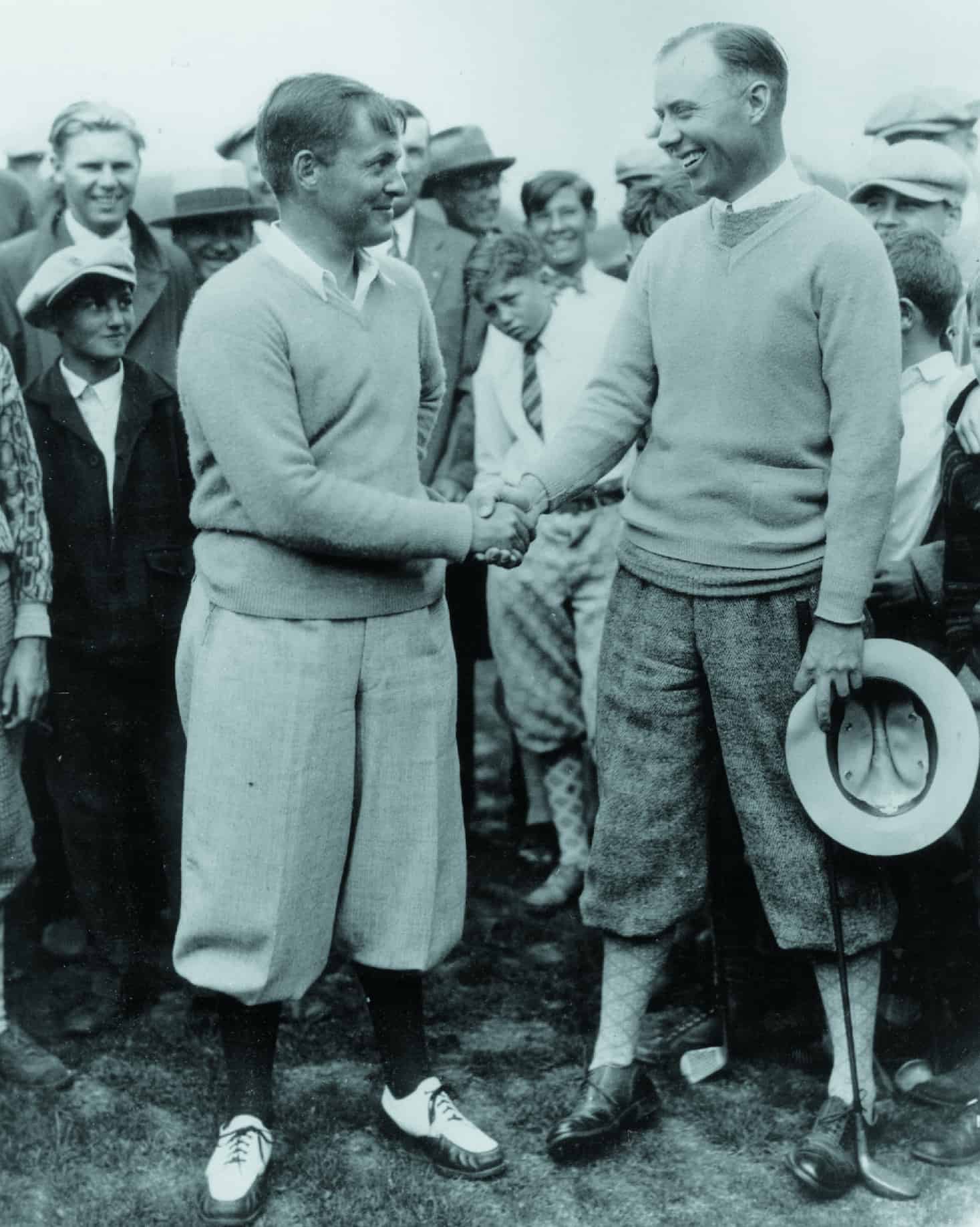
Chick Evans (right) with Bobby Jones

In 1929, acclaimed amateur golfer Charles “Chick” Evans Jr. asked the Western Golf Association (or WGA, located outside of Chicago, Illinois) to administer a fund he had established to send deserving caddies to college. Mr. Evans learned the game of golf while caddying. As he became successful in golf and life, he believed that there were many hard-working caddies who were academically inclined but did not have the financial wherewithal to go to college. Looking back on the program in 1969, he said:

“No one more than I knew that caddies have a love for wisdom. My mother and father believed that education is a vital factor in determining what kind of nation America will be. And so, farsightedly, these thoughts of ours were molded into America through college scholarships for deserving caddies . . ..”

The WGA awarded its first two scholarships in 1930, sending caddies to Northwestern University. (Until World War II, all Evans Scholars attended Northwestern.) From that humble beginning, the program has significantly grown in terms of numbers of applicants, schools where applicants are matriculating, and funds available to provide scholarships. As of the 2023-24 academic year, there were 1,130 Evans Scholars enrolled in 24 different universities, and 12,040 students had graduated as Evans Scholars.

Applications are growing (but still seem relatively small to me, given the benefits). In 2018-19 there were 810 applications and in 2022-23 there were 875. As you will see below, granting of the scholarships is not automatic. Nationally, the acceptance rate has hovered around 35 percent (although I do not think that there is any target acceptance rate by the program), with 325 applications being granted in 2022-23.

The foundation that funds the program now receives contributions in excess of $50 million per year. The foundation is funded by many sources, including contributions from members of Par Club that was established by WGA to support the program; contributions by courses, clubs, and individuals; funds from local golf tournament fundraisers; and proceeds from national championships including the WGA championships and the BMW Championship (one of the events in the PGA Tour Playoffs for the FedEx Cup).

The Application Process

Scholarship applications are accepted at the beginning of an applicant’s senior year of high school, as well as from college freshmen (the vast majority of applicants are high school seniors; college freshman that apply are generally those who were denied a scholarship in high school because of something that could be rectified). The deadline for filing the application (which includes supporting documents like evaluations, recommendation letters, transcripts, test scores, a College Scholarship Service (or CSS) profile, and personal essay) is October 15. To qualify, applicants must meet the requirements of having a strong caddie record, excellent academics, demonstrated financial need, and outstanding character. Let’s look at each of those requirements:

  • Strong caddie record: Applicants must have caddied or have worked around the clubhouse, regularly and successfully, for a minimum of two years. There is no minimum number of loops (a round of golf where the student serves as a caddy) required, but the applicant should be working at their sponsoring club/course the year they apply for the scholarship (and the more loops the better). The selection committee often looks to see what other applicants in the geographic area have done (how many loops; what other work was done). [Side note: the Evans website has some great videos on how to caddie (and it taught me the best way to rake a trap).] To become a caddie, it is up to the club/course to accept the applicant (the Evans Scholarship Program is not a youth caddie program).
  • Excellent academics: Applicants must have completed their junior year of high school with above a B average in college preparatory courses. There is no definition of “college preparatory courses,” but generally the courses are considered AP courses and should be academically rigorous.
  • Demonstrated financial need: Applicants must have a need for financial assistance. This is generally shown using tax returns and the CSS profile, an online application used by colleges and scholarship programs to award non-federal institutional aid. Financial need is not a bright line. Evaluators look at the overall situation of the applicant to determine if there is a financial need.
  • Outstanding character: Applicants must be outstanding in character, integrity, and leadership, which is generally shown by letters of recommendation and the activities that the applicant is doing other than going to class and doing loops.

[Note that the applicant must still select which college to attend and be admitted in the normal course to be awarded the scholarship.]

If the written application is approved, the applicant then has an interview (generally 20 minutes) before a selection committee made up of program supporters. The panel then takes about a week to deliberate and contacts the applicant the week thereafter.

Once an applicant is awarded a scholarship and is matriculating, scholars must maintain an above 3.0 GPA and be involved (in a positive way) with school activities (and not do anything stupid). The Evans Scholarship Program provides academic, professional, and social resources that help students maintain the needed GPA. The graduation rate for Evans Scholars is a whopping 95 percent. The Evans Scholarship Program also provides career guidance and a massive amount of business and professional connections that assist the scholar after graduation.

Evans Scholarship Program in Oregon

There are 11 facilities that presently actively provide applicants for the Evans Scholarship Program in Oregon: Willamette Valley Country Club, Eugene Country Club, Oswego Lake Country Club, Waverley Country Club, the Portland Park and Recreation golf courses other than RedTail (Eastmoreland Golf Course, the Heron Lakes courses (both the Greenback Course and the Great Blue Course), and Rose City Golf Course), Gearhart Golf Links, Columbia Edgewater Country Club, the Bandon Dunes complex, and Bend Golf Club. (To apply for a scholarship, you do not have to caddie at any of these facilities, but finding a facility that has a caddie program is limited and these facilities have knowledge about the Evans Scholarship Program, which probably really helps in the application process.)  As of 2023, there had been a total of 341 Evans Scholars from Oregon. Of these, 250 have attended University of Oregon (who began accepting scholars in 1950). In the 2022-23 academic year, there were 23 applications from Oregonians and 9 of those folks were awarded scholarships. The vast majority of applicants from Oregon stay in Oregon to go to college.

Evans Scholars at the U of O Evans House

Several universities across the country provide housing specifically for Evans Scholars. The University of Oregon opened its Evans Scholarship House in 2016. It can house up to 38 scholars (I hear, comfortably). Almost all residents are from Oregon, but Evans Scholars from other states have stayed there while going to U of O. The house has Residential Advisors and Faculty Advisors, and has a Scholars’ board providing for self-governance. In the 2022-23 academic year there were 33 Evans Scholars at the House, 29 from Oregon and SW Washington.

The Oregon facilities who have had the greatest number of Evans’ scholars have been: the Portland Parks and Recreation golf courses, through its EAGLE Caddy program (with 77 scholars all time); Waverley Country Club with 66 Evans Scholars; and Bandon with 53 scholars. Note how different these complexes are: muni courses, the oldest private course/club in the state, and a world-renowned golf complex. They each provide a slightly different path to the Evans Scholarship Program, but they all strongly support their caddies and the Evans Scholarship Program. And at none of these places does the potential applicant need to know how to caddie or even play golf.
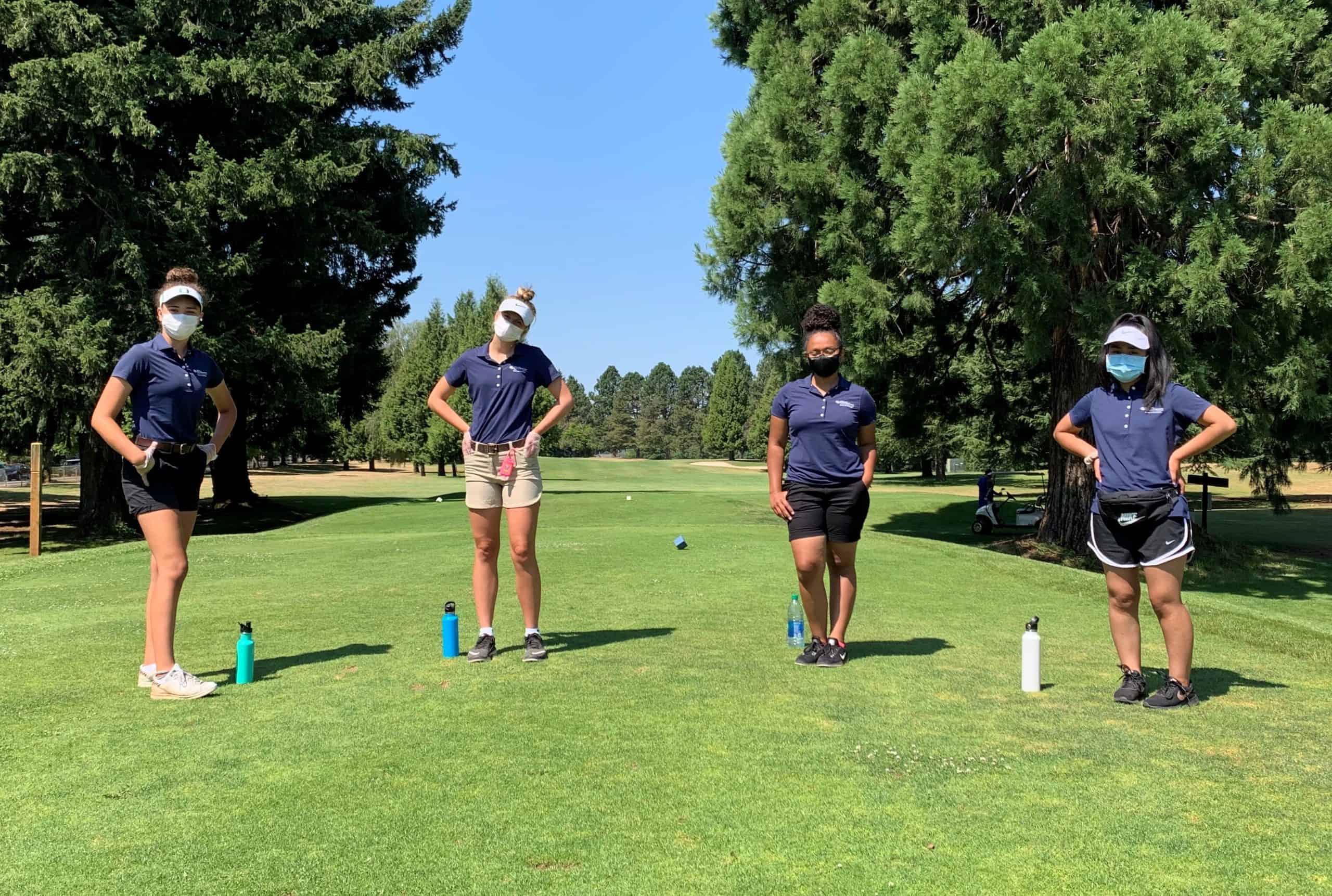
Eagle Caddy program
EAGLE Caddies at Rose City GC. Photo curtesy of Portland Parks & Recreation
  • The EAGLE Caddy Program (Early Adventures in Golf for a Lifetime of Enjoyment) is run by Portland Parks and Recreation. It focuses on currently-enrolled Portland high school freshmen with solid grades from financially disadvantaged families. It is competitive to get in. You have to show good school attendance, have a 9th-grade cumulative GPA of at least 3.25, and the family’s annual income cannot exceed $75,000. The applicant must agree to work at least 20-hours per week in the summer and sign-up for the entire 3-year program. If accepted, the program provides training, mentors, work-study credit, and part-time employment at a Portland municipal golf course. Students do not have to have golfing experience: you get on-the job training. Students successfully completing this three-year program may then apply for the Evans Scholarship. The program averages ten participants per year, most of them being nonwhite. [And kudos to Portland Parks for directing non-Portland folks to other courses that have caddie opportunities for Evans applications.] For more information on the EAGLE Caddy Program go to https://www.portland.gov/parks/sports/eagle
  • Waverley has many members who are WGA members and are or have been on the Evans Scholarship Board (and they annually host the interviews for the Oregon and SW Washington applicants). Waverley recruits students by contacting counselors at local high schools. Interested students are provided with a simple application that asks questions about the applicant’s financial situation, academics, and character. Applicants do not need golfing experience. In early Spring, almost all applicants are invited to participate in a short caddie training program (where they are provided information about the Evans Scholarship Program). The students then do training loops with selected members and staff. By the summer, the applicants are placed in the caddie pool. They are expected to be at the club two days a week and when asked. If there are no loops available on the days the student is required to be at the club, the student is provided a stipend. Otherwise, the student gets paid as a normal caddie would. Waverley generally has a caddie pool of 30 to 40 and about 2 to 3 caddies are working towards an Evans Scholarship (and Waverley is trying to accommodate more). For more information about Waverley’s program, contact Assistant Pro Tyler Ames at [email protected]
  • Bandon works with local (Coos Bay, North Bend, Coquille and Bandon) high schools to recruit for its caddying program as a path to an Evans Scholarship. Bandon usually has between 20 and 30 such caddies (high school freshmen to seniors) working at the resort each summer. The application process is simple – high school students contact Bandon’s Caddie Services staff. Bandon looks for students who meet the Evans Scholarship criteria, but don’t reject an applicant because they do not yet fit the Evans Scholarship Program standards. The applicant does not need golfing experience (yes, I am repeating myself to stress a point). If accepted (and most are), Bandon then conducts training that consists of caddying for other caddies and staff members. The applicants are evaluated after each round. As soon as they are deemed “guest ready,” the applicants are placed in the caddie pool. Applicants do not get paid until they start caddying for guests. For more information on Bandon’s program, contact Katie Gross, Director of Caddie Services [email protected]

The Broad Positive Effects of the Evans Scholarship Program

I started researching for this article because I was curious about the relationship between caddying and getting a scholarship. Between the time that Mr. Evans set up the scholarship to today, the idea of a caddie has substantially changed: in the 1920s it was a given that a course would have caddies and a caddie shack, and caddies were part of a normal foursome; now few courses, in particular public courses, have caddies, and you take a cart, not a caddie. In the present-day Evans Scholarship Program, Mr. Evans’ original idea to aid people who were already caddies in their academic pursuits has been preserved, but his program has reached an even broader effect (that he may or may not have intended) in at least two ways. First, the application process demonstrates to high school students how caddying can help achieve life goals:

“Being a caddie was the best summer job I could ask for. . . . It accelerated my maturity because it showed me the benefits of working hard and taught me emotional intelligence.” Isaiah Troung

“Caddying taught me the benefits of hard work. . . .I learned how to interact positively with different people and to pay attention to detail.” Saul Galvan

“Caddying was the first time I interacted with adults. It helped me be more confident, especially in social settings.” Lilly Varner

And the benefit of a caddie program with diverse young caddies does not work just one way:

“They [the Evans Scholar applicants] provide as much value to the members as the club provides to them.” Tyler Ames, Assistant Pro, Waverley Country Club

Second, the Evans Scholarship Program has caused more people to be introduced to the game of golf who would not otherwise have been. We know golf is deficient in attracting players that are women and/or non-white. The incoming 2023 Evans Scholarship class included 38 percent women and 36 percent BIPOC folk (this is compared to 25 percent of all golfers being women and 18 percent of all golfers being non-white, as reported by the National Golf Foundation).

The Evans Scholarship Program not only benefits its scholars (in so many different ways) and their families, but also the courses/clubs that use them and the game of golf in general by broadening the game’s appeal.

How to Grow the Program in Oregon

As I stated in the opening paragraph, the Evans Scholarship Program is one of the best college scholarship programs in the country and is not that well known. Although the program is active in Oregon, the number of applicants could increase and the locations where applicants are from could geographically broaden. So what can you do?

Promote the program. If you know a young smart teenager (or a parent of one) that may have financial difficulty in getting through college, tell them about the Evans Scholarship Program. If you know a middle or high school teacher or administrator, tell them about the program. If you are active in your club (private or public) talk to your club or club staff about setting up a supporting caddying program and reach out to the local middle and high schools. Here is a link to the Evans Scholarship Program website which has more about the program as well as applications. https://wgaesf.org For help in setting up a program to support possible applicants at your club or course, contact Todd Melrose, Vice President of Development, Western Golf Association/Evans Scholars Foundation, [email protected]

Donate. Attend local fun raising events. For example, Bandon Golf Club (made up of golfers from the Coos Bay area), hosts an annual dinner and auction to support the Evans Scholarship program. There is also the Evans Cup of Oregon golf tournament, attended by lots of Oregon golf pros, Evans Scholars, Evans alums, and supporters. Unfortunately the 2024 Evans Cup of Oregon is already at capacity, but look for it in following years. You can also sign up to be a member of the WSGA’s Par Club. https://wgaesf.org/content/par-club Or you can simply donate (kudos to the caddies at Bandon for regularly making contributions).

Take A Caddie! This is the best way to support students wanting to be Evans Scholars. If you are playing any of the Portland Parks courses, ask for an EAGLE Caddie. If you are playing at Bandon, ask for a caddie who is working to be an Evans Scholar (or who is an Evans Scholar). If you are playing at any of the Oregon clubs listed above that supports the Evans Scholarship Program, ask for a caddie who is working to be an Evans Scholar. Generally, the caddies are available in the summer (but ask anyway at any time). Yes, it does cost extra, but it will provide a big benefit to the student and you will probably have a better time playing.
Women In Golf In Oregon

I was getting a bit tired of the PGA vs LIV mess, where more attention was being paid to the competition between the organizations instead of the competition on the course. Then: I watched Rose Zhang for the first time; I read that the great Oregon-born golfer (and winner of multiple Oregon junior and women’s state championships) Gigi Stoll won her first Epson Tour event; and watched the Women’s US Open at Pebble Beach Golf Links (which was great). I found that staying in tune with professional women golfers was much more fun than watching the men.

And I wondered about the state of women in golf in Oregon. (I’ll admit that when I started looking into it, I am not sure what I was using for the definition of “state of women in golf.”)

Very Brief History of Women in Golf

Mary Queen of Scots golfing at St Andrews (National Library of Scotland)

For centuries women have been subject to exclusionary and/or repressive tactics and attitudes in golf. Mary Stuart, Queen of Scotland from 1542 to 1567, was an avid golfer. During her reign, the Old Course at St Andrews was established (although some of it was built before). But after her death, golf became popular with business folks (read: businessmen), men’s sporting attire was much less restrictive than women’s (you try to hit a driver with a corset), and there was a pervasive male dominant attitude across societies. GOLF became “Gentlemen Only, Ladies Forbidden.”

This attitude against women golfers lasted well into the 20th century. Here is a 1893 quote reflective of the time., Horatio Gorton “Horace” Hutchinson, golfer, golf writer, and captain of St. Andrews Golf Club, responded with the following to an inquiry on the advisability of forming a professional ladies’ golf club:

I have read your letter about the proposed Ladies Golf Union with much interest. Let me give you the famous advice of Mr Punch (since you honour me by asking for my opinion). DON’T. My reasons? Well?
1)Women never have and never can unite to push any scheme to success. They are bound to fall out and quarrel on the smallest or no provocation; they are built that way! 2) They will never go through one Ladies’ Championship with credit. Tears will bedew, if wigs do not bestrew the green.
Constitutionally and physically women are unfitted for golf. They will never last through two rounds of a long course in a day. Nor can they hope to defy the wind and weather encountered on our best links even in spring and summer. Temperamentally, the strain will be too great for them. THE FIRST LADIES’ CHAMPIONSHIP WILL BE THE LAST, unless I and others are greatly mistaken. The LGU seems scarcely worthwhile.
[Emphasis in original. Mr. Punch was the byline of a golf humorist of the time. The LGU was formed in 1893 anyway and successfully continued until it merged with the R&A in 2017. A round of raspberries for Mr. Hutchinson.]

Women Golfers at Portland Country Club in 1923

Progress for women in golf was slowly made in the late 19th and 20thcenturies: the first US Women’s Amateur was played in 1895, the American Ladies’ Golf Association was formed in 1897, the Women’s Professional Golf Association was formed in 1944, and the LPGA was established in 1950. Yet, certain clubs continued to ban women and/or women members. Augusta National Golf Club did not start admitting women until 2012. In 2019, Sports Illustrated noted that several golf clubs in Great Britain and the US still did not allow women members. Oregon, of course, was not immune: single women were not allowed to be members at Waverley Country Club until 1991. Even after women were admitted as members, some clubs failed to provide separate facilities for women and/or excluded women from playing golf during a substantial portion of tee times.

With this continued overt bias against women in golf, it is no wonder that the number of women playing golf (in the world, in the US, and in Oregon) was vastly below the number of men. Channel Signal (relying on numbers provided by the National Golf Foundation, or NGF) reported in 2012 that only 19% of golfers in America were women.

There was, however, a significant increase in women golfers during COVID. The NGF reported that between 2019 and 2022 there was a 14% increase in women golfers, with women accounting for 25% of all golfers by 2022. More importantly, the NFG reported that between 2012 and 2022, there was a 28% increase in beginning women golfers so that by 2022 41% of beginning golfers were women (and 36% of junior golfers were girls in 2022).

What is Happening in Oregon
I was unable to find any organization in Oregon that was tracking the number of women golfers in the State. The only public courses where I found any tracking where the ones owned by Portland Parks & Recreation, now managed by Kemper Sports (being the two courses at Heron Lakes, Colwood Golf Course, Eastmoreland Golf Course, and Rose City Golf Course). Unfortunately, Portland Parks only recently started keeping track and then only through responses to questionnaires (it’s self-selecting, and the number of female golfers is probably above the 12% that the survey found). NGF believes that Oregon is generally following the national pattern regarding the overall increase of women golfers, so that presently approximately 24% of on-course golfers in Oregon are women.

First Tee - Greater Portland
Girls at First Tee-Greater Portland (photo courtesy First Tee-Greater Portland)

An admittedly incomplete gathering of information from other sources on female golfers in Oregon provides a mixed bag. First Tee – Portland reported a decrease in girls participating in First Tee – Portland programs, from 545 in 2019 to 235 in 2023 (this was very troubling to me as by all reports First Tee – Portland has a great program; I was not able to get from First Tee if the percentage of girls participating dropped or if the drop in numbers for girls was reflective of a drop in number of total participants). Over the past 4 years, Oregon School Activities Association (OSAA), which oversees high school golf competition in Oregon, has seen an 8.6% growth in the number of high school girls on golf teams in the state (from 970 in 2018 – 2019 to 1054 in 2022 – 2023), but the relative number of girls compared to all high school golfers has stayed pretty much the same at 37% and the amount of increase in the number of boys on teams was greater during that period at 22% (from 1464 in 2018 – 2019 to 1790 in 2022 – 2023). The Oregon Golf Association reports that the percentage of its membership that are female has stayed very steady over the past several years at about 19%. The Oregon Chapter of the PGA (or OPGA) reported that the percentage of women OPGA professionals in Oregon went from 3% (or 13 total) in 2015 to 4% (or 19 total) in 2023 (so, pretty small). Right now, there appears to be only one head pro in all of Oregon who is a woman: Kennedy Swann Bodiford at Tokatee. (I note that Melinda Murry Drummond is the head of instruction at Top Golf in Hillsboro.) There is a smattering of women in assistant pro or teaching positions at courses and clubs, but as the OPGA numbers show, it is very few.

Oregon Courses
Juniper Golf Course

On the other hand, certain courses in Oregon have reported a material growth in participation by girls and women in golf. Ocean Dunes Golf Course in Florence reported that its women’s club has grown 75% over the past four years (OK, the total now is about 35, but the rate of growth in a small town is impressive). Juniper Golf Course in Redmond has seen the number of it’s regular women’s players increase by about 30% over the past 5 to 7 years (although the number of girls at its pee-wee camp has stayed about the same). Stone Ridge Golf Club in Southern Oregon has seen the percentage of women playing at its course increase from 0 to 20% in the past four years. The percentage of girls participating in junior clinics at Stone Ridge has also grown over the past four years.

Red Tail golf
RedTail Golf Course

RedTail Golf Center, in the Portland metro area, probably has the largest instruction program in the state (measured by number of instructors, number of classes, and/or number of participants). It has seen the number of participants in its Intro to Golf for Women increase by about 55% from 2019 to this year. The number of girls participating in RedTail’s junior camps increased by 30% over the past 5 years. And the number of women in RedTail’s three women’s clubs (two 9-hole clubs and one 18-hole club) have significantly increased, although the vast majority of increase has come from one 9-hole club that is afforded a shotgun start for playing. The number of its members in its women’s 18-hole club has stayed relatively constant.

OK, What is Going On

Barbra Trammell

In an interview with Pacific Northwest PGA reflecting on her successful career as OGA CEO, Barb Trammell commented on the status of the women’s game at the time of her 2022 retirement:
Although the women’s game has certainly grown and expanded its reach over the years, we still have work to do with making women feel welcome at golf courses and with participating in organized events. It’s not enough just to create a dedicated women’s initiative and put it out into the community. The “build it and they will come” mentality does not work with women. We like to be invited. A personal phone call to proactively reach out with an invitation to join a group, a club or an event goes the extra mile to make someone feel included – and wanted! As far as getting more women (as well as other diverse demographics) into career positions in golf, there must be a concerted effort to provide opportunities specifically for those individuals. If you have an open position, think of ways to reach qualified candidates who are diverse and could bring a perspective to your staff that you currently do not have.

This quote is a great response to my question on the state of women golfers in Oregon. Initially, Oregon has done well in getting more girls and women to play golf. There appears to have been a significant increase in both the number of girl and women golfers in Oregon, and courses and programs in Oregon have developed a roadmap on how to succeed in getting more girls and women to play the game. Here are some examples:

  • Stone Ridge changed ownership in 2019. The new management took at least the following steps to welcome and encourage girls and women to play: improving the forward tees, improving the restrooms, having golf merchandise for women, offering reduced fees on certain days for women, and changing the café menu to include wine and healthier food options.
  • Juniper attributes its success to a philosophy of: making sure all women feel welcome when they are on property; treating women the same way they treat men (in a positive way); and immediately addressing all issues arising from the “archaic mentality some men retain that women should not be on the golf course.”
  • RedTail attributes it’s success to many things, starting with a sizable female staff – from folks in the pro shop, to assistants in the junior camps, to pros. RedTail also carries a large amount of women’s equipment and clothing (women can help women select clubs). RedTail hosts a variety of methods for how girls and women can have an initial golf experience – from small social events that include a bit of golf, to a few holes with a pro, to classes, to camps, to lessons, to multiple clubs (and that variety then forms stepping stones for girls and women to play better and get more involved).

A lot has been written about the question of how to attract more girl and women golfers. Although a material difference is made between how to attract girls or women (the former focusing on family support, social interaction (including social media), and success recognition), the most common tip that I saw was to make the potential female golfer feel welcome and invited: get rid of the “this place is for men” vibe and spend a bit more time inviting and then welcoming the newcomer. Ms. Trammell is right, and the courses in Oregon that I mention above are providing such a welcoming atmosphere and succeeding in attracting more girls and women to play.

Ms. Trammell’s quote makes a marked distinction between getting more girls and women to play and getting more women into the profession. On the latter point, Oregon does not seem to be improving. This is shown in several different ways: the lack of an increase in female members of OPGA, the lack of an increase in female members of OGA, the relatively flat percentage of girl high school golfers from OSAA (although a good increase in numbers), and even RedTail’s experience of showing a marked increase in its 9-hole (more socially-oriented) clubs, but not its 18-hole women’s club. Although there does seem to be an increase in women business managers of golf clubs (which is great), there remains a very low number of women golf program managers, pros, and teachers.

So What; Now What

Ashley Bogaerts, RedTail Golf Center

Should we care about the lack of professional women golfers in Oregon? Initially, if golf courses want to increase the number of its customers by increasing the number of girl and woman golfers (a sizable demographic), it would be beneficial to have women in positions of authority having direct interaction with customers. For example, Ashley Bogaerts, the new pro at RedTail, reported that her golf instruction classes became full with girls and women as soon as her name went out as a new instructor. Kennedy Swann Bodiford, the head pro at Tokatee, has found that women come to her from far away because the woman golfer wants a woman teacher and they can’t find one in their area.

If more women golf professionals would improve the golf business in Oregon, how could that be done? Anyone who has worked on hiring in a male-dominated field knows that hiring and retaining women is much more successful when there are women in places of authority and support (I am not saying it can’t be done, I am just saying that chances for success materially increase; note now I am suggesting that there are no less than two good business reasons to increase the number of women golf professionals in Oregon). As the number of girl and women golfers increase, how does Oregon bridge the gap and attract more women golf professionals? I was fortunate to have the opportunity to speak with three extraordinary women golfers now in Oregon about their experience in becoming successful golf professionals.

  • Ashely Bogaerts was one of the highest rated high school golfers in Arizona and is now a teaching pro at RedTail. She was introduced to golf as a child when her father, an avid golfer, suggested that she and her mother take group lessons together. Ashley caught the bug and was playing in tournaments by the time she was 9. She grew as a golfer with help from the local First Tee, the Bill Dickey Scholarship Association, and the LPGA/USGA Girls’ Golf of Phoenix Future Stars program (which helped Ashley to be better on the course and prepared her for college). Ashley was awarded a golf scholarship to Texas Southern but after one year on its golf team, she found herself burnt out and took a pause from golf. Later, at the urging of her parents, she earned her LPGA Class A certification, which she used to get jobs as a golf professional, winding up instructing at RedTail. Ashley says that at all points in her golfing experience she felt she had the support and resources to do what she wanted in golf. Now as an instructor, she feels she can share the game that she loves with many.

    Kennedy Swann Bodiford at Tokatee Golf Course
  • In 2021, Kennedy Swann Bodiford was on the team at Ole Miss that won the NCAA Golf title and then became the first woman to win the Oregon Open. She is now the only woman head pro in Oregon at Tokatee Golf Club. She started to play softball, but when her coach pushed her away from the game, she started playing golf with her dad. Before high school, she had two swing coaches who took her to the next level, and she was ready to be competitive in a strong high school district (and she was, ranked as the third best high school woman golfer in Texas). She continued to use a swing coach during high school. She started at Clemson and then transferred to Ole Miss. Her coach at Ole Miss helped her with the mental game and course management, but she points to the mentorship of older women players in helping her make the bridge to becoming a professional.
  • Shelly Liddick has been an LPGA member since 1993 and has had a very successful career as a player and college coach (being named LPGA National Coach of the Year in both 2012-2013 and 2013-2014). She is now a pro at Rock Creek Country Club in the Portland metro area (where she offers lessons and clinics to the public). She was a college golfer when several people encouraged her to take the next steps to the mini-tours. During recovery for an injured shoulder, with some help from her former coach, she began teaching and coaching (and still competed). She never thought of doing anything outside of the golf business, but after experiencing a variety of positions in golf, she sees a variety of opportunities for women wanting to be in the golf business.

    Shelly Liddick winning Nebraska Women’s Amateur Golf Association’s 2021 Golfer of the Year

What I took away from these three accomplished women at various stages of their careers is that there are different paths to becoming a golf professional and you don’t have to be a playing pro to be in a position of authority. Each of these women have inherent drive, desire, and talent. All received encouragement, mentoring, and/or support at several points along their journeys, whether it was from individuals or organizations. Some of the organizations are listed above, but they also include, to name a few: LPGA Teaching Education Program, PGA Works, and the PGA PGM Associate Program.

To expand on Ms. Trammell’s quote, to get more women in the golf profession, there should be a concerted effort to provide opportunities and support. At all points in the growth of a girl/woman golfer, provide moral support and point to programs that could provide financial and training support (and note that being a leader in the golf industry does not just mean being a playing pro). And if you manage a golf facility, recognize the economic benefit of having women in visible positions. As Ms. Trammell stated, there needs to be a concerted effort by the golf industry (and I would suggest players as well) to improve on the present situation.

I want to thank all the people who were gracious enough to provide me with their valuable time as I was doing research for this article: Vincent Johnson at Portland Parks, Bob Rannow at Ocean Dunes Golf Links, Wes Gribas at RedTail, Rob Malone at Juniper Golf Course, Greg Loper at OGA, and Dominic Marconi at OPGA. And a very big thanks to Ashley Bogaerts, Kennedy Swann Bodiford, and Shelly Liddick; I was so honored to talk with each of them.


PS (from summer of 2024): since writing this article, two other women have been appointed head pros for golf courses in Oregon: Chanlee Trump at Persimmon and Jessica McClellan at Old Macdonald. If folks know of additional women who serve as head golf pros for courses in Oregon, please email us at [email protected]

FlingGolf in Oregon

I was doing updates on the posts for the various golf courses in Oregon when I came across a reference to FlingGolf (yes, one word). Not knowing anything about it, I Googled the phrase and watched a video of a frustrated golfer meeting with a very happy person who had a FlingStick and used it to toss a golf ball down a golf  fairway. https://www.youtube.com/watch?v=HfNm6lJrOEQ

I was intrigued, not for me to abandon what I have tried to do for 50 years, but as a way to increase business on a golf course. So, I did some research.

Years ago, Alex Van Alen and his brothers and friends played golf with lacrosse sticks at his family farm in Pennsylvania. (Does this remind you of the pioneer golfers in Gearhart over 130 years ago?) But Mr. Van Alen wanted to increase the ball flight using a lacrosse motion. Finding a jai alia basket on the web, he came up with the FlingStick and then formed the company New Swarm Sports LLC to manufacture the FlingStick and promote the sport of FlingGolf. www.flinggolf.com

The FlingStick

The FlingStick is made up of a grip and shaft (both like a golf club) and a head composed of a channel and a striker pad. It’s about the length of my 3 wood, and the whole thing weighs less than a pound. You place a golf ball in the channel, take the stick over your shoulder and bring it forward quickly in an arching motion (like jai alai or lacrosse), and (most importantly) follow through. The ball releases from the channel and heads down the fairway. [This is the “standard stroke” – more on this later.] You can generate more power and distance by running while bringing the stick forward provided that the ball is released before you get to the tees or the “ball spot.” The advice on the FlingGolf web site about a stroke is: “Don’t overthink it. You should swing as hard as you can.”

The FlingStick and FlingGolf were made public in 2014, and FlingSticks were displayed at the PGA Merchandise Show in 2015. There has been a slow but progression of sales of FlingSticks and use of FlingSticks on golf courses, with a significant bump occurring in 2021 after Mr. Van Alen and his business partner John Pruellage made a pitch about FlingGolf on the TV show “Shark Tank.” https://www.youtube.com/watch?v=Lml3ykKhJko&t=33s

New Swarm states that FlingGolf has been played at over 1,600 courses in 31 different counties. However, there is no tracking of how many people have played the sport or how many rounds there have been. New Swarm, a private company, has not published year-over-year sales records. In a 2018 interview, Mr. Van Alen stated that the majority of FlingGolf was being played on the east coast, following areas that have enthusiasm for lacrosse.

Recently, efforts to promote the sport have focused on FlingGolf tournaments through the World League FlingGolf. It had its first championship in 2021, and has a 5-stop nationwide tour scheduled for 2023. At least a portion of the tour will be televised on one of the ESPN networks.

There are official rules. Unlike the R&A and USGA Rules of Golf, which go to over 200 pages (OK, with illustrations), there are only five pages of FlingGolf rules. See https://flinggolf.com/pages/rules  The rules evidence the present simplicity of the sport. On the tee, you may take as many steps as you want (to generate additional power) before “hurling the ball” as long as the ball is launched before the tee marker. On the fairway (or in a hazard), there is a box you play from: formed by where the ball lies (this is the “ball spot”), two FlingSticks to either side of the ball spot, and five steps back from the ball spot (in a direction away from the hole). The shot is essentially the same: you pick up the ball (you are always allowed to clean the ball), put it in the channel of the FlingStick, and launch the ball before the ball spot. The main difference from the tee shot is that you can only take five steps back from the ball spot.

If you are in a bunker, hazard, or OB, you take one penalty stroke and go to the point of entry (or, if in a trap, directly back from the hole), then form the box you play generally from and make a stroke. But you can also play from the trap (without moving the ball first) or from a hazard (where you can pick up the ball before hurling it) without penalty. So you can go on into the water and pick up and play the ball (without penalty).

You use the FlingStick to putt. You place a “putting slug” in the channel (to give the very light club some weight) and then putt in the normal fashion. Or you can putt by hitting the edge of the front of the channel either swinging between your legs or in a normal putting stroke.

I referenced the “present simplicity of the game” and quoted “standard stroke” before because the game is at its nascent stages. The methods of how to move the ball forward with a FlingStick are still being developed. Flop shots and bump and runs are shown on the FlingGolf website. But I understand that some folks are flinging sideways or backwards (facing away from the hole). I am sure as more folks try using a FlingStick for longer periods, all sorts of new motions to propel a golf ball will be discovered.

So how much is FlingGolf played in Oregon? Your own experience is probably an indication. Although the FlingGolf website shows that FlingGolf has been played at least once on the vast majority of Oregon courses (referred to as “Liberated” courses), I had never seen a FlingStick before I went searching for one. The FlingGolf website identifies five courses where you could rent a FlingStick: Chinook Winds, Cross Creek, Creekside, Santiam, and Buffalo Peak. But conversations with the pro shops at those courses revealed a decided lack of course involvement or promotion of FlingGolf. Chinook Winds does have FlingSticks, but they have never rented them (and in two and one-half years, the pro shop has only seen one pair of FlingGolfers, who brought their own sticks). Neither Cross Creek or Creekside know if they have any sticks and the pro shops have never seen any FlingGolf players.

Buffalo Peak does have FlingSticks to rent, has rented them, and has a regular (small and not increasing) customer base of local college students who play FlingGolf. (Curious that promoting to local colleges may be the way to go, I checked with similarly situated courses near colleges or universities – Trysting Tree, Emerald Valley, and Laurelwood – and none of them have seen FlingGolf players or have FlingSticks to rent.)

Santiam has a few FlingSticks to rent. They were big on the potential of the sport initially, but did not see much response. Still, Jake Dalke in the pro shop became fairly proficient with the FlingStick and will take the time to demonstrate how to hurl the ball.

So one sunny early Spring day, I went to Santiam to try out FlingGolf.

The FlingStick is surprisingly light, but not as flexible as I thought. (I am sure someone is figuring out how to make a stick with  very flexible alloy so you could really launch a ball,) After watching Jake take a few hurls on the range, I tried it, and quickly was able to hurl the ball 100 to 125 yards. And almost all the shots went straight. I emptied a small bucket, finding the advice on the website and from Jake to be correct: don’t think about your form except to follow through and aim about 50 yards above your target.  I was surprised that the ball released from the channel of the FlingStick without having to do anything other than complete the follow-through.

I tried a few lob shots around the practice green (that was pretty shaky) and a few putts with the weight slug (two golf balls in a pouch; that was even more shaky). The pro shop wanted to make sure I did not play with regular golfers because it thought I might slow the group down. So I went to the first tee by myself and “teed off” with the FlingStick from the forward tees.

Here is what I found, some of it very surprising:

  • You only have one very light club, which makes for a very nice and easy walk.
  • Rough is not an issue. You lift the ball out of the rough, load the ball in the channel, and take a shot.
  • You are allowed to clean the ball on every shot (a big deal in the Spring in Oregon), just make sure you bring a towel.
  • Be mindful of how slippery the ground is – in an effort to create force, you may do the splits after you release the ball if the ground is wet.
  • Approach shots are tricky and probably take time to master. After trying a few underhand shots, I stuck with a bump and run, using an overhand abbreviated arc, and aiming short of the green (the motion still caused a lot of ball speed).
  • FlingGolf would be good in the cold as your wrists and forearms would not hurt after a missed shot.
  • Some golf balls are too big for the channel. Make sure the ball is able to move freely in the channel before taking a shot (most of the balls I use I have found – so some may be deformed).
  • Distance is a bigger issue than trajectory. Almost all my shots went straight.
  • Putting is tricky. For me, the FlingStick was too long (again, about a 3 wood) and too light (even with the putting slug) to putt with. It felt like I was putting with a headcover on.
  • Even though the walk on the course was easy, I found that flinging the ball took more overall physical effort than a normal golf shot (I am not saying that’s bad). After nine holes, my right forearm and right hip felt more strain (but not that much more) than I normally feel (I am right handed).

(For the record, I triple-bogied or more most holes, but had two bogies, which I thought was pretty good for the first time.)

I was told by two pros that one of the reasons why they thought FlingGolf would not catch on was because of the intimidation factor (big course with big hitting regular golf players who would look down at a FlingGolfer). After playing nine holes, I disagree. I quickly caught up to the foursome of traditional golfers in front of me (it’s an easy walk; there is not much of a practice swing; and the shots, although short, go straight). I was then joined by a threesome of traditional golfers behind me: two male bogey golfers and a female bogey golfer. I explained to them what I was doing, that it was my first time trying it, and that I was playing from the forward tees. They were intrigued, I parked my ego, and the four of us had a great time (easily keeping up with the group in front of us)!

Santiam Golf Club

And I think that’s where the success of FlingGolf might lie: a way for non-golfers to have easy access to a sport that is played on a golf course with friends or parents.  FlingGolf is extremely accessible. If you can’t find a FlingStick to rent, a FlingStick costs less than a couple of knock-off clubs (New Swarm has basic new FlingSticks for $124 and kids FlingSticks for $89). It is a very simple game to learn, takes only a few hurls to get decent yardage, and you go to your normal golf course.  Unlike foot or disc golf, you play the normal golf holes. Golfers and non-golfers can play a golf course, be challenged, and have a great time.

But I won’t be converting. I like the old game that I have played for so many years. But if I had a friend who didn’t play golf that I wanted to spend some time with, I would suggest he/she try FlingGolf and that we walk together. Because that is one of the reasons why I play: not to score well or hit a great shot (although those are nice), but to be outside in attractive places with people I enjoy. And in the one round that I had with the FlingStick, I discovered that golfers and flinggolfers can have a great time on the course together.

Thanks to the staff at Santiam Golf Club for taking the time to help me try FlingGolf.